Railway Drainage and Erosion Protection Using GCCM in Wardha, Maharashtra
Introduction
Railway infrastructure operates under some of the most demanding environmental and operational conditions. Continuous vibrations from train movement, seasonal rainfall, and soil erosion around embankments and drainage channels can significantly affect the stability and longevity of railway corridors. To mitigate these risks, modern railway engineering increasingly relies on geosynthetic technologies that provide durable protection while reducing construction time and maintenance requirements.
This case study explores the use of Ocean Geosynthetic Cementitious Composite Mat (GCCM) 5 MM in a Railway Project in Wardha, Maharashtra, where advanced geosynthetic technology was used to enhance drainage channel durability and control erosion around railway infrastructure.
Table of Contents
Project Overview
Project Name: Railway Project
Location: Wardha, Maharashtra
Product Supplied: Ocean Geosynthetic Cementitious Composite Mat (GCCM) 5 MM
Quantity Used: 1,160 SQM
The objective of the installation was to provide a durable erosion control layer capable of protecting drainage channels and embankment slopes along railway infrastructure exposed to heavy rainfall and continuous mechanical stress.
Role of GCCM in Railway Infrastructure
Geosynthetic Cementitious Composite Mats are an innovative material that combines the flexibility of geosynthetics with the durability of concrete. When hydrated, GCCM forms a thin, hardened concrete layer that provides structural protection against erosion and water flow.
In railway projects, GCCM is commonly used for:
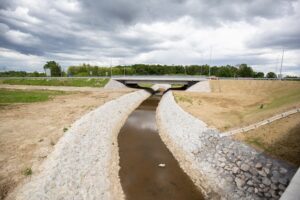
- Drainage channel lining
- Slope and embankment protection
- Culvert lining
- Erosion control around bridge foundations
Traditional concrete lining methods often require formwork, extensive curing time, and significant labor. GCCM systems eliminate these requirements and can be installed much faster.
Research from the Transportation Research Board (TRB) shows that GCCM-based lining systems can reduce installation time by up to 50–70 percent compared with conventional cast-in-place concrete.
Geosynthetics in Railway and Infrastructure Applications
Geosynthetics play a vital role in modern railway construction by improving soil stability, drainage performance, and structural longevity.
Common applications include:
- Pavement reinforcement
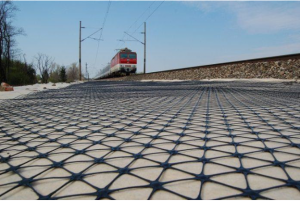
- Geogrids distribute loads and reduce deformation under heavy rail traffic.
- Soil stabilization
- Geotextiles separate weak soil layers and prevent mixing with aggregates.
- Erosion control
- Geosynthetic mats protect slopes from rainfall-induced erosion.
- Drainage management
- Geocomposites allow efficient subsurface water flow beneath track structures.
- Environmental protection
- Geomembranes prevent contamination from railway maintenance yards.
According to the International Union of Railways (UIC), geosynthetic solutions significantly improve the performance of railway infrastructure built on weak soils.
Site Challenges in High Rainfall Regions
Although Wardha lies in central India, the challenges encountered during the project are similar to those faced in high rainfall regions like Guwahati or Northeast India.
These challenges include:
- Soil erosion during monsoon seasons
- Subgrade instability caused by water infiltration
- Difficulty maintaining drainage channels
Without proper lining systems, drainage channels often degrade quickly, leading to sediment buildup and reduced water flow capacity.
Installation and Quality Control
Successful GCCM installation requires strict adherence to installation guidelines.
The key steps include:
- Subgrade preparation to ensure smooth placement
- Anchoring the mat along edges and slopes
- Hydration of the cement layer using water spraying
Quality control measures involve:
- Inspection of overlaps
- Ensuring full hydration
- Monitoring curing conditions
Improper hydration or insufficient anchoring can reduce the strength and durability of the system.
Long-Term Performance and Durability
One of the major advantages of GCCM technology is its durability under harsh environmental conditions.
- GCCM provides:
- High resistance to erosion
- UV stability
- Crack resistance due to fiber reinforcement
Laboratory studies show that GCCM systems can maintain structural integrity for decades when installed properly.
Maintenance and Lifecycle Benefits
GCCM-lined channels require minimal maintenance compared with conventional concrete systems.
Benefits include:
- Reduced repair frequency
- Improved resistance to hydraulic erosion
- Lower long-term maintenance costs
These advantages make GCCM an attractive solution for railway infrastructure projects.
Conclusion
The Railway Project in Wardha demonstrates how advanced geosynthetic materials like GCCM can significantly improve the durability and performance of railway drainage infrastructure. Ocean Non Wovens continues to support critical infrastructure projects across India by supplying high-performance geosynthetic materials engineered for reliability and efficiency. With extensive manufacturing expertise and project experience, Ocean Non Wovens remains a trusted partner for infrastructure developers seeking durable and innovative geosynthetic solutions.
 Geosynthetics Products for Ground Performance Improvement
 Case Study: Building a Sustainable Oil Pit Storage System in Kharsang, Arunachal Pradesh Using Ocean HDPE Liner – 1500 Micron
 Canal Lining: Enhancing Water Management with Ocean Non Wovens Geotextile