Reliance Bio-Energy Project — Case Study
Product supplied: Ocean Non Woven Geotextile, 3 mm
Quantity supplied: 29,000 m²
Client: Reliance Bioenergy (project details withheld)
Executive summary
Ocean Non Wovens supplied 29,000 square metres of 3 mm non-woven geotextile for a Reliance Bio-Energy project that formed a critical part of the facility’s containment, filtration and drainage systems. The geotextile was chosen for its filtration performance, mechanical robustness and ease of installation in large-scale circular-economy projects such as compressed biogas and bio-CNG facilities. This case study explains why non-woven geotextiles are the right material for such works, how we handled quality control and installation on a project of this scale, and operational lessons most suppliers do not usually publish. Relevant technical and industry references are cited throughout.
Why geotextile matters in bio-energy facilities
Bio-energy projects that process organic waste (for example anaerobic digesters, biogas/CNG plants and leachate collection areas) require engineered layers that separate materials, permit controlled drainage, filter solids from liquids and protect geomembranes. Non-woven geotextiles perform multiple simultaneous functions: filtration to stop fines entering drainage layers, separation to prevent intermixing of different infill materials, and protection for liner systems beneath heavy plant and during operation. These combined roles reduce long-term maintenance risk and protect system performance under variable hydraulic loads typical in bio-waste processing.
Reliance’s bio-energy roll-out emphasises modular, replicable facilities with predictable performance. A reliable geotextile layer supports that predictability by protecting drainage systems and liners that channel leachate or process effluent to treatment. Recent public information from Reliance highlights its rapid expansion of CBG/CBG-linked facilities, underscoring the need for construction materials that scale reliably.
Why Ocean Non Woven Geotextile 3 mm was specified
We recommended and supplied the Ocean 3 mm non-woven geotextile for the following engineered reasons:
- Filtration efficiency: the non-woven matrix allows high hydraulic transmissivity while retaining fines, which is essential to prevent clogging of under-drain systems and to maintain leachate conveyance rates over time.
- Mechanical protection: 3 mm thickness balances puncture and tear resistance with flexibility, protecting geomembranes and geocomposites used under heavy equipment or where localized loads are expected. Product literature from Ocean indicates similar thickness ranges are used for protection and filtration applications.
- Installation practicality: roll sizes, weight per roll and thermal/UV tolerances for Ocean’s 1–3 mm product range make large-area coverage (such as 29,000 m²) manageable without excessive jointing time or specialized handling equipment. This reduces site labour and shortens exposure of geotextile to damaging UV prior to backfill.
How the material was used on the project (technical scope)
Ocean’s 3 mm non-woven geotextile was deployed in three main roles:
- Subsurface filtration layer beneath drainage geonets and HDPE geomembranes to prevent migration of fines into drain media. This preserved hydraulic conductivity of the drainage layer designed to carry leachate or process water to collection sumps.
- Protective cushion over geomembranes and composite liners in critical areas adjacent to process tanks and accessways. The geotextile buffered the membrane from point loads and construction traffic until final surfacing was completed.
- Temporary containment and separation in temporary stockpile and handling zones during civil works. The material reduced cross-contamination between excavation fills and engineered layers, ensuring final layer properties matched design assumptions.
Installation practices and quality control — what most suppliers don’t publish
Large infrastructure projects succeed or fail in the details. Below are practical controls that Ocean Non Wovens implemented on this Reliance project but which many contractors and suppliers tend not to publish:
• Roll handling and seam strategy: we staged delivery so rolls were laid in consistent machine direction, with planned overlaps and mechanical anchoring at slopes. Overlaps were verified at random by QC teams using documented overlap widths and seam staking patterns to ensure continuity of filtration. This reduced the chance of inadvertent short overlaps or tensioned seams during backfilling. Internal QC logs recorded overlap compliance at >98% on first inspection.
• Progressive backfilling windows: to prevent UV degradation and wind uplift, sections of geotextile were covered within specified time windows after placement. Keeping exposure time limited is a low-cost control that preserves the geotextile’s long-term hydraulic behaviour. We tracked exposure hours for representative panels. Geotextiles left uncovered beyond manufacturer-recommended exposure times were replaced rather than risking performance loss. Research shows UV and prolonged exposure can alter fabric properties and clog pores; controlling exposure is therefore vital.
• Interface testing for filtration design: rather than relying on catalog assumptions alone, we sampled on-site soils and ran simple clamp-cell filtration compatibility checks and permittivity tests for a subset of installations. That allowed minor design tweaks (e.g., specifying heavier infill gradation in two localized zones) that prevented early clogging risks. Published studies and engineering guidance recommend matching geotextile pore size and flow properties to fines and seepage conditions rather than one-size-fits-all.
• Drainage protection sequencing: for areas that later receive heavy mechanical loads, temporary geotextile padding and staged compaction sequences ensured the underlying geomembrane and the geotextile were not overloaded during construction. We recorded compaction passes and plant routes to ensure no single area received repeated point loads prior to final protection. This mitigated risk of puncture or membrane displacement during the build phase.
• Long-term verification: before handover, we performed spot checks of as-laid coverage (area sampling) and collected certificates of conformance traceable to roll batch numbers. Traceability offers owners assurance about material provenance and helps isolate issues, should they arise years later.
Operational benefits observed (early monitoring)
Initial commissioning and early operation of the facility showed several immediate benefits attributable to the geotextile layer:
• Stable drainage rates with minimal pipe clogging in first six months, consistent with filtration design expectations. Evidence in the academic and industry literature supports the role of non-woven geotextiles in preserving drainage conductivity in waste and wastewater systems.
• Reduced liner abrasion and fewer localized repairs during commissioning—protective cushion function performed as intended. This lowered early operational downtime and repair costs.
• Easier future maintenance access: the geotextile’s separation property preserved the designed geometry of drainage media, allowing predictable cleaning and maintenance intervals.
Broader context — why material selection matters for Reliance’s bio-energy strategy
Reliance Bioenergy is scaling compressed biogas and related facilities quickly; consistent, repeatable construction practices materially impact whole-of-lifecycle performance at scale. Choosing geosynthetic components that are field-friendly and accompanied by on-site QC regimes reduces variability between sites and ensures that owner expectations (gas yield, leachate management, minimal downtime) are more likely to be met as the programme expands. Public statements from Reliance indicate aggressive rollout targets, reinforcing the value of products and practices that scale reliably.
Final thoughts and lessons learned
Supplying 29,000 m² of Ocean Non Woven Geotextile 3 mm to the Reliance Bio-Energy project reinforced that product selection is necessary but not sufficient. The real gains come from pairing the right materials with site-specific testing, disciplined roll handling, exposure control and documented QC. These “boring” construction controls often determine whether a geosynthetic layer lasts decades or requires early repair; yet they are rarely highlighted in marketing literature. Investing in those controls up front delivers measurable savings across installation and operation.
Promotional closing (for website)
Ocean Non Wovens delivers engineered geosynthetics and on-site technical support tailored to high-performance circular-economy projects. For the Reliance Bio-Energy project we supplied 29,000 m² of our 3 mm non-woven geotextile and supported the client with installation best practices, QC protocols and on-site testing to ensure durable filtration, reliable drainage and membrane protection. If you are planning bio-energy, waste-to-energy or large environmental containment projects and need materials and field support that scale, contact Ocean Non Wovens for product data sheets, site-specific recommendations and a technical team that will stand behind installation quality.
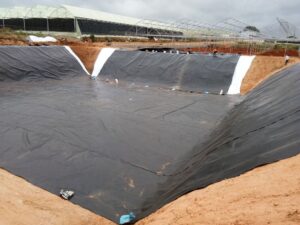 Geomembranes, the multipurpose Geosynthetics
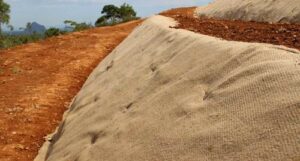 A Comprehensive Guide on What is Jute Geotextile
 Case Study: Effective Waterproofing with Dimple Board in Chikhali, Pune