Case Study: HDPE Lining for the Ever-Enviro Project in Balrampur, Uttar Pradesh
For the Ever-Enviro Project in Balrampur, Uttar Pradesh, Ocean Non Wovens supplied and installed 17,500 square metres of HDPE (High-Density Polyethylene) lining. The project built containment for waste materials, and the liner is the layer that keeps leachate and process liquids out of the soil and groundwater.
Project overview
The Ever-Enviro Project was set up to improve waste management practice in Balrampur’s growing industrial base. Its scope included containment for waste materials designed to limit environmental impact. Ocean Non Wovens supplied 17,500 square metres of HDPE lining for that containment.
HDPE was specified for its durability, chemical resistance and ability to cope with temperature swings, from cold north Indian winters to hot summers.
Why HDPE for industrial containment
- Durability
Geomembrane-grade HDPE contains carbon black and antioxidants that protect it against UV and oxidation, and it resists a wide range of chemicals. Good resins also have high stress-crack resistance, which GRI-GM13 sets minimum values for. The result is a liner that does not need frequent replacement. - Tolerance of ground movement
HDPE elongates a long way before it breaks, so it can follow minor settlement of the subgrade without tearing, which matters in landfill cells and waste lagoons. - Environmental protection
An intact, properly welded HDPE liner is effectively impermeable to liquids, which stops toxic or hazardous liquids from seeping into the soil or groundwater. For Ever-Enviro, this was the main reason for using it. - Cost
HDPE is economical per square metre against other liner materials, and its long life reduces repair and replacement costs.
Installation and challenges
- Site preparation and assessment
The team checked the site for surface irregularities that could damage the lining, compacted the substrate and removed debris to give a smooth, stable base. - Lining installation and seaming
The 17,500 square metres of HDPE lining was rolled out over the prepared surface and the panels were thermally welded together. HDPE geomembranes are joined by hot-wedge fusion welding on long seams and extrusion welding at patches and details. Seam quality decides whether the liner holds up under heavy rain and process loads. - Quality control and inspection
Every seam was inspected, and gaps or imperfections were repaired immediately. Independent auditors also tested the lining to certify that it met the required standards. - Monsoon scheduling
HDPE welding needs dry conditions, and Balrampur’s monsoon brings heavy rain. The team installed the lining in phases around the weather forecast, which kept the schedule on track without compromising weld quality.
Details that affect HDPE liner performance
- Thermal expansion
HDPE expands and contracts noticeably with temperature. On Ever-Enviro the lining was installed with calculated slack so it could move without being pulled tight in cold weather, which would stress the seams and the sheet. - Seam testing and leak detection
Seam samples were tested regularly during the project to confirm the welds met industry standards. Typical tests are air-pressure testing of dual-track wedge seams (ASTM D5820), vacuum-box testing of extrusion welds (ASTM D5641) and peel and shear tests on cut samples (ASTM D6392). A leak-detection system was also integrated, so problems can be found before they become contamination. - Future extensions
New HDPE sections can be welded onto an existing liner after cleaning and grinding the old sheet, so a facility like Ever-Enviro can extend its containment as operations change.
Geosynthetics and industrial waste
Containment liners are what make industrial and waste sites safe neighbours: they keep contaminants out of soil and water. The Ever-Enviro Project used HDPE lining to give Balrampur’s industrial zone that protection, and the same approach applies to landfills, effluent lagoons and waste storage across India.
About Ocean Non Wovens
Ocean Non Wovens manufactures and supplies geosynthetics, including HDPE geomembranes, for waste management, industrial and infrastructure projects. Contact the team to discuss HDPE lining or other geosynthetic products for your project.

source on Google
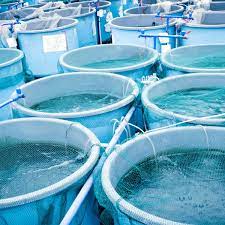 Biofloc Fish Farming
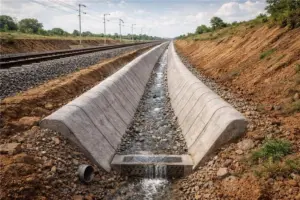 Railway Drainage and Erosion Protection Using GCCM in Wardha, Maharashtra
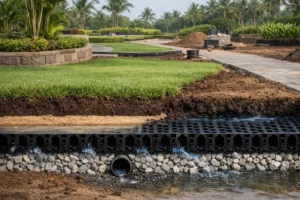 Case Study: Landscaping Drainage Upgrade in Khorda, Odisha