Flood Protection in Assam – Case Study
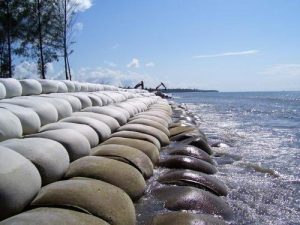
Ocean Non Wovens supplied 10000 Ocean Geobags of 300gsm fabric for flood and erosion protection in Assam. Few states in India lose as much to rivers as Assam does: floods destroy crops, homes and roads every monsoon, and bank erosion takes land away permanently.
Product – Ocean Geobags 300gsm
Quantity – 10000 bags
Location – Assam
Problem
Assam’s river network makes it highly vulnerable to floods and erosion, which hold back the state’s growth. The Brahmaputra and Barak rivers, with more than 50 tributaries between them, flood large areas during the monsoon every year. In the extent and duration of its floods and the severity of its erosion, Assam’s problem is among the most serious in the country.
The region’s geology adds to it. The northeast is seismically active, and earthquakes and landslides in the hills deliver large volumes of sediment to the rivers. As the riverbeds build up, channel capacity falls and the rivers flood and shift more readily.
Bank erosion is the other half of the problem. Along the Brahmaputra, the Barak and their tributaries, the Assam Water Resources Department estimates that nearly 8000 hectares of land are lost to erosion each year, and that bank erosion has widened the Brahmaputra to as much as 15 km in places. The annual cost of erosion damage is estimated to run to several hundred crores.
Losses like these fall hardest on rural areas: farmland, homes and village infrastructure go first, and land that has eroded into the river does not come back.
Solution
Conventional bank protection with stone, concrete or boulder-filled structures is expensive and slow to build in Assam, where suitable stone often has to be hauled long distances. Geobags filled with local river sand are a cheaper alternative. Indian geobag manufacturers, including Ocean Non Wovens, make geobags that can be built into sand-filled revetments and walls to protect banks, guide flow away from a vulnerable reach, or slow the river along an eroding bank.
The bags are made of non-woven geotextile, here 300gsm, which is permeable: water drains through the fabric while the sand stays inside, so pressure does not build up behind the structure. Placed in overlapping layers on the bank slope, and as a launching apron at the toe, geobags form a flexible mass that settles into scour holes as they develop instead of cracking like a rigid wall. Because they are built from material on site with light equipment, geobag works also put less load on nearby buildings and structures than heavy construction.
The same properties make geobags useful in other water-related works, such as scour protection around harbour and jetty foundations in strong currents, cofferdams, and protection of dam and canal embankments.
For a larger river protection project, see how 9,000 Ocean geobags protected the banks at Chhapra, Bihar, or browse more case studies.

source on Google
 Case Study: Enhancing Sustainability in Allahabad’s Bioenergy Project with Ocean HDPE Liners
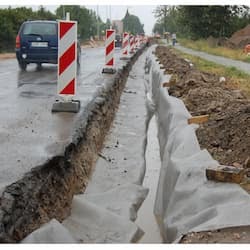 Geotextiles in Pavement and Drainage Applications
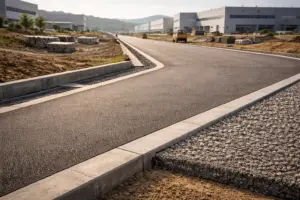 Reliance Project, Jabalpur (Madhya Pradesh): Application of Non Woven Geotextiles for Ground Stabilisation and Drainage Performance