Geosynthetic Clay Liners or GCLs in Landfill Engineering
People call landfills “dumps”, but a modern landfill is an engineered facility and a core part of any waste management plan. Municipal solid waste (MSW) landfills in particular have to be sited, designed, built and operated to strict government and environmental rules. Every landfill is different, but the same issues come up on all of them: erosion, sedimentation, stormwater and leachate. Geosynthetics are used throughout landfill construction, and this post looks at one of them: geosynthetic clay liners, or GCLs.
Table of Contents
Ocean Geosynthetics supplies GCLs for landfill projects of all sizes.
Industrial growth, urbanisation and population growth are producing more waste in India every year. Poorly managed waste pollutes soil and groundwater and harms public health. Geosynthetic clay liners are now widely accepted as a barrier layer in solid waste landfills.
Fundamental Landfill Design:
A landfill has to keep its waste from contaminating the environment. The liner system stops leachate (the contaminated liquid that drains out of waste) from seeping into groundwater, the leachate collection layer drains it away for treatment, and the cap limits rainwater entry and controls the escape of landfill gas. Designed and run properly, a landfill disposes of solid waste within the regulations.
The GCL is one layer of a wider system. Our guide to how landfill and pond liners differ sets out what the SWM Rules 2016 ask of a landfill base liner and cap, and how that compares with lining a pond.
GCLs in Landfill Engineering:
In a landfill, a GCL acts as a hydraulic barrier. That is a different job from the filtration, separation, reinforcement and drainage done by other geosynthetics in the same facility.
A GCL is a factory-made alternative to a thick compacted clay liner. It consists of a layer of sodium bentonite (a natural clay sealant) held between two geotextiles, usually needle-punched together. When the bentonite is wetted it swells into a dense gel with very low hydraulic conductivity, typically around 1×10⁻¹¹ to 5×10⁻¹¹ m/s, so a sheet under 10 mm thick does the job of a much thicker layer of compacted clay.
GCLs are physically tough and durable in containment systems. The lower the hydraulic conductivity, the less seepage gets through. Bentonite is self-healing: it swells to seal small punctures and closes around penetrations, and needle-punched GCLs have internal fibres that give the hydrated bentonite layer the shear strength needed on side slopes. GCLs come in rolls that are laid with simple overlaps, often with extra bentonite powder at the seams, so installation is faster than placing and compacting clay. In base liners they are usually used under an HDPE geomembrane as a composite liner. One caution: bentonite can lose some of its sealing ability if it is hydrated with leachate or water high in calcium or magnesium, so it should be hydrated with clean water and covered promptly. See how Ocean supplied a 6 mm GCL for a landfill project in Odisha.
Typical GCL applications in and around landfills:
- Base liners in landfills.
- Surface impoundment liners
- Gas seals and landfill caps
- Secondary containment
- Tailings containment
- Waterproofing
- Groundwater protection
- Vertical barriers
Compared with compacted clay, a GCL needs less excavation and clay haulage, uses less landfill airspace, and can be installed faster.
Contact Ocean Global to discuss GCLs for your landfill. We will match the product to your site requirements.

source on Google
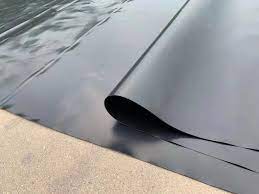 Landfill Project at Delhi – Case Study
 Ocean Polymer Net on the Kohima-Jessami Road Project, Nagaland
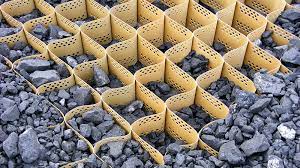 The Benefits of Using Geocells
