Enhancing Infrastructure Stability: Ocean Non Woven Geotextile in NTPC Work, Bhuj, Kutch
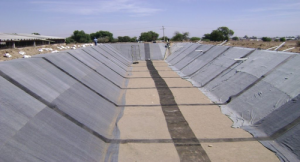
Ocean Non Wovens supplied 31,000 square meters of Ocean Non Woven Geotextile for an NTPC project in Bhuj, Kutch. The geotextile was used for soil stabilization, erosion control and drainage on embankments, slopes and retaining walls in one of the harshest climates in India.
Project overview
NTPC, India’s largest power utility, undertook the project in Bhuj, Kutch, as part of its energy infrastructure work. Materials had to cope with the region’s climate and soils over the long term.
Site conditions in Kutch
Bhuj lies in the arid Kutch district of Gujarat. Summers are very hot, dust storms are frequent, and rainfall is low and erratic, typically under 400 mm a year, often falling in a few heavy bursts during the monsoon. Those bursts run off fast and gully bare slopes. Soils vary across the district, and saline soils and groundwater are common. Kutch is also in seismic zone V, the zone of the 2001 Bhuj earthquake, which puts extra demand on embankments and retaining structures.
Why a non-woven geotextile
A needle-punched non-woven geotextile is a permeable fabric that separates soil layers, filters water and drains. On embankments and slopes it sits beneath the cover layer or riprap, holding soil back while water passes. Behind retaining walls it wraps the drainage zone so fines do not wash into it. Polypropylene is unaffected by salts and alkaline soils, which suits Kutch ground conditions.
Product properties
- Tensile strength: enough to survive placement and cover without tearing, and to hold soil in place against erosion. A non-woven is a separator and filter rather than a primary reinforcement; where reinforcement is needed, a geogrid or woven geotextile does that job.
- Permeability: water passes through while soil particles are retained, which relieves water pressure and prevents soil loss.
- Chemical Resistance: resistant to chemicals and biological degradation, so it keeps its properties over time.
- UV Stability: UV-stabilised to tolerate exposure during installation. Like all polypropylene geotextiles, it should be covered promptly, especially under Kutch sunshine; long-term exposed use shortens its life.
Results
- Soil Stabilization: the geotextile reduced erosion risk and helped keep embankments, slopes and retaining walls intact.
- Water Management: its permeability allowed water to drain instead of ponding, while keeping soil in place for vegetation to establish.
- Cost Efficiency: a low-cost material with a long service life reduces maintenance and repair over the life of the works.
- Environmental benefit: less soil erosion and better conditions for vegetation, in line with NTPC’s environmental commitments.
Ocean Non Wovens manufactures and supplies geosynthetics for infrastructure and energy projects across India. For slope and erosion work, see also our erosion control mats and case studies.

source on Google
 Case Study: Preventing Landslides in Nanded, Maharashtra with Ocean HDPE Liner – 1000 Micron
 The Ultimate Guide To Geotextile Fabric
 Case Study: Building a Sustainable Oil Pit Storage System in Kharsang, Arunachal Pradesh Using Ocean HDPE Liner – 1500 Micron