Slope Protection – Goli Dam, Khairi HP Case Study
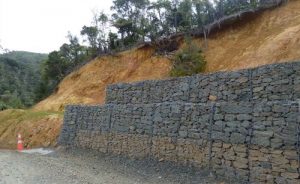
Ocean Non Wovens supplied 500 Hexagonal Woven Double Twisted gabion boxes for slope protection at Goli Dam, Khairi, Himachal Pradesh. In hill terrain like this, slopes fail when heavy rain saturates loose soil and debris, and gabion walls are one of the most practical ways to hold them: they are built from local stone, drain freely, and tolerate ground movement without cracking.
Landslides, the downward movement of rock, soil or both along hill slopes, damage roads, dams, homes and farmland in Himachal every monsoon. Excavation, mining, loading and unloading of slopes, and deforestation all add to the natural causes. Lasting fixes deal with the slope’s stability, surface erosion, drainage and groundwater together, and geosynthetics and gabions are now standard parts of that work.

Product – Hexagonal Woven Double Twisted Gabion Box
Quantity – 500 boxes
Location – Goli Dam, Khairi HP
Problem
Cloudbursts, and in higher valleys glacial lake outbursts, bring intense rain that saturates soil on the slopes and loosens it. Once it starts moving, the wet soil gathers speed and carries debris down with it. Around a dam and its approach works, that threatens the structures themselves as well as access roads and the reservoir. The underlying cause is an unstable, poorly drained slope, so the work has to stabilise the slope and control water on it.
Gabions help in two ways. As retaining walls at the toe or on benches, they hold the slope back. As check dams across gullies and drainage lines, they slow the flow of water and trap sediment, so runoff is less able to scour the slope and saturate it. Because a gabion is full of stone, water passes through it freely, so pressure does not build up behind it the way it does behind a solid wall.

Solution
A gabion is a box of hexagonal double-twisted steel wire mesh, filled on site with hard stone. The double twist matters: if one wire is cut, the twist stops the mesh unravelling. In India these products are specified under IS 16014 (mechanically woven double-twisted hexagonal wire mesh gabions, revet mattresses and rockfall netting), and gabion structures in road and hill works are covered by IRC SP:116.
Gabions are used to slow concentrated runoff and to stabilise slopes with seepage problems or non-cohesive soils. They suit soil-water interfaces where turbulence and flow velocity would erode bare soil, and they can be built on steeper slopes than riprap. On a confined hillside where there is no room for a gentler vegetated slope, they are often the only practical option.
As a wall, the boxes are stacked and wired together into a mass gravity structure. Its weight resists the lateral earth pressure from the slope and holds back debris. Advantages for a site like Goli Dam:
- Local materials: the boxes are filled with stone from the site or nearby, so only the folded mesh has to be trucked up hill roads.
- Quick assembly: boxes are unfolded, laced and filled by hand, with little heavy equipment.
- Free drainage: water drains through the stone fill, relieving pressure behind the wall.
- Flexibility: the mesh lets the wall deform with settlement or ground movement without breaking, where a rigid concrete wall would crack.
- Height: with proper design, gabion retaining walls can be built to around 30 feet (about 9 m) high.
- Corrosion protection: hot-dip galvanised wire, with an optional PVC coating, resists rust in wet hill climates.
Good water channelling and drainage around the walls keeps them working for years with little maintenance. Ocean Non Wovens supplies gabion boxes, mattresses and other products for retaining walls, slope protection and river training work, including rockfall protection for hill roads. More projects are on our case studies page.

source on Google
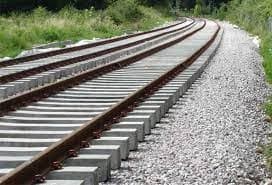 Geosynthetics for Railway ballast stabilization
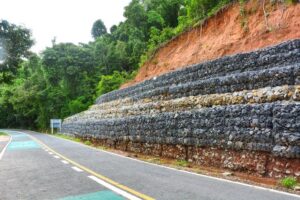 Landslide Protection and Slope Protection With Gabion Retaining Wall
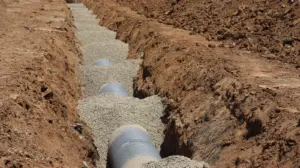 Advanced Leachate Drainage Infrastructure with Ocean Drainage Geocomposite 5.5 MM in Odisha Landfill Project
