Top 6 Drain Cell Uses And Benefits

A drain cell is a plastic drainage layer laid under the soil of a roof garden. A drain cell for terrace garden use carries excess water off the slab to the outlets, so the soil does not waterlog and water does not stand on the waterproofing.
Drain cell mats for terrace gardens are now common in rooftop gardens, green roofs and podium planters, where the slab cannot drain water into the ground below. This article covers what they are, how they work and what to look for if you are buying them for the first time.
Table of Contents
A drainage cell system gives a flat, even base for the soil with an open void underneath for water to flow through. Drainage cells are commonly made from recycled polypropylene, which does not rot and resists the chemicals and bacteria found in soil. Because the drainage layer is thin and light, landscapers can give roof gardens the soil depth that established plants need.
What Is A Drain Mat For Terrace Garden?
A drain mat for terrace garden use is a permeable plastic layer that supports soil and plants while letting excess water drain away. It is usually a moulded grid or cup structure. A nonwoven geotextile filter fabric is laid on top so water passes through but soil particles stay in place and do not clog the drainage void.
These mats are used in terrace gardens, green roofs and other raised planting where gravel or pipe drains would be too heavy or impractical. They give a stable base for the growing medium and keep water away from the structure below.
What Is The Use Of A Drain Cell Mat For Terrace Garden
On a landscaped roof, drain cells form the drainage cavity and add a protective layer over the waterproofing membrane, which removes the need for a heavy gravel layer. The modules interlock side by side on the same plane, or at right angles for upstands and walls.
Top 6 Benefits Of Drain Cell For Terrace Garden
Here are the main benefits of a drain cell for terrace garden use:
- Improving Drainage: The cells carry excess water away from plant roots, so the soil does not waterlog.
- Controlling Soil Loss: With filter fabric on top, the soil stays in place and is not washed into the outlets.
- Lightweight Design: Drain cells weigh far less than a gravel drainage layer and are quick to lay, which matters on terraces and green roofs with load limits.
- Supporting Plants: A drained root zone helps roots grow and reduces the risk of root rot.
- Protecting Roofs and Structures: Water is carried to the outlets instead of standing on the slab, and the cells shield the waterproofing membrane from roots and damage during planting.
- Environmental Benefits: Many drain cells are made from recycled plastic.
Drain Cells Manufactured by Ocean Geosynthetics in India

Ocean Global manufactures drain cells with high compressive strength and an open structure, in a range of sizes and lengths to suit the project.
The drain cell range from Ocean Non Woven Pvt. Ltd. includes Podium Garden Geo Drain Cell, Flexo Drain Board, Turf Grass Drainage Cell, Drain Cell for Parking and Gardening, Geo Drain Cells, Green Wall Grass Paver and drainage mats.
The most commonly ordered drainage cells are the HDPE 13 mm flexo drain cell and the 20 mm and 30 mm drain cells. For basement walls and below-grade waterproofing, see also our dimple drain board.
How Is A Drain Mat For Terrace Garden Manufactured?
The process depends on the product, but most drain mats for terrace gardens are made by injection moulding or thermoforming plastic (usually PP or HDPE) into a grid or cup pattern. The shape gives the mat its compressive strength and the open void that carries water.
Frequently Asked Questions (FAQs)
How can you cut a drainage cell?
Cut drainage cells to size with a circular saw or hand saw. When laying the filter fabric over the cells, overlap adjacent sheets by 150mm at the seams, and leave extra fabric around the perimeter so it can be turned up against the waterproofing membrane and walls before you trim it.
What are the drain cells in gardening?
Drain cells are interlocking plastic modules, often made from recycled polypropylene or HDPE, that create a void under the soil. Water passes through the filter fabric on top, runs through the void and is carried to the roof outlets or drains.
What is a drainage cell used for?
Drainage cells are used for highway edge drains, roadways, retaining walls, driveways, basements, roof gardens, abutment drainage behind waterproofing, green roofs, saturated ground and sports fields.
Is the drain cell for the terrace garden safe?
Yes. Drain cells are lightweight compared with a gravel drainage layer, so they add little load to the slab, and the plastic does not rot. Check that the slab is designed for the weight of saturated soil and plants, and that the waterproofing is in place before laying the cells.
Is it possible to drain your garden naturally?
On ground-level gardens, free-draining soil and a slope can be enough. On a terrace or podium the slab cannot absorb water, so a drainage layer such as drain cells covered with filter fabric is needed to keep the soil from waterlogging.

source on Google
 Case Study: Slope Protection and Sustainable Infrastructure Development Using Ocean Geosynthetic Cementitious Composite Mat 10 MM for a Coal Mining Project in Purba Medinipur, West Bengal
 Enhancing Railway Infrastructure with Geotextiles in UP State
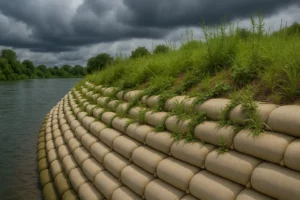 Flood Control with Geobags: A Sustainable and Effective Approach
