Geo Bags Uses & Prices
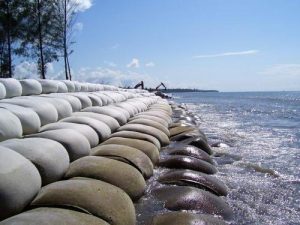
Geo bags are large bags of geotextile, woven or nonwoven polypropylene or polyester, filled on site with sand or soil. Stacked or dumped in place, they protect riverbanks and beaches from erosion and form temporary or permanent flood walls. Because they are filled with local sand, only the empty bags have to be transported, which keeps costs down on remote river sites.
Here are four common applications.
Table of Contents
Prevention of Soil Erosion at River Banks

India’s large rivers, especially in the Ganga and Brahmaputra basins, erode their banks every monsoon, taking farmland and embankments with them. Sand-filled geo bags laid as a revetment on the bank slope and as a falling apron at the toe protect the bank against current and wave action. The geotextile holds the sand while letting water drain through, so the bags do not build up pressure behind them. On Ocean’s Chhapra, Bihar project, 9,000 geobags were used to protect flood-prone river banks.
Cost-Effective Alternate for Curbing Floods
Concrete and stone flood defences are expensive and slow to build. Sand-filled geo bag walls can be built quickly with local sand and labour to divert or hold back flood water, and placed without disturbing existing buildings or structures. The same bags can form small check dams and bunds for rainwater harvesting in drought-prone regions such as Marathwada in Maharashtra.
Construction of Ports, Dams, and Harbours

In ports, dams and harbours, geo bags are used for bunds, core fill and toe protection where structures face strong currents. They also protect the bases of docks in areas with fast water. Ocean supplied PET geobags for the Bambolim dam project in Goa.
Scour Protection of Groynes and Breakwaters
Groynes and breakwaters are built out into the sea to break wave energy and protect the coast. Waves and currents scour the seabed at their base, which undermines them over time. Geo bags placed around the toe as a scour apron stop that undermining and so extend the life of the structure, at lower cost than rock armour in areas where suitable rock is scarce.

source on Google
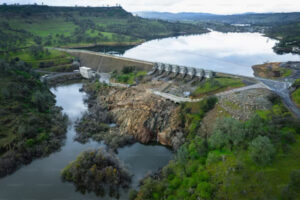 Case Study: Reservoir Project in Ramgarh, Jharkhand
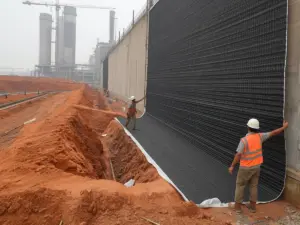 Keeping a Landmark Plant Dry: Ocean Geo Composite at the BCGCL Project, Jharsuguda, Odisha
 Environmental Containment with Ocean Geosynthetic Clay Liner 6 MM in Odisha Landfill Project