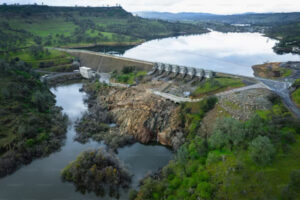
Case Study: Reservoir Project in Ramgarh, Jharkhand
For a reservoir project in Ramgarh, Jharkhand, Ocean Non Wovens supplied and installed 8000 Sqm of Ocean HDPE Geomembrane-1.5 mm to line the reservoir and stop seepage losses. Reservoirs like this store water for irrigation through the dry months, and on the permeable, weathered ground of the Chota Nagpur plateau an unlined reservoir can lose much of what it collects in the monsoon.
Project overview
Location: Ramgarh, Jharkhand
Product Used: Ocean HDPE Geomembrane-1.5 mm
Quantity Supplied: 8000 Sqm
Project Type: Reservoir Construction and Lining
Why HDPE for reservoir lining
High-Density Polyethylene (HDPE) geomembranes form a continuous, effectively impermeable barrier across the reservoir bed and slopes, so water stays in the reservoir instead of seeping into the ground. For reservoir lining, HDPE geomembranes offer:
- Durability: resistance to puncture, chemicals and UV radiation. Carbon-black-stabilised HDPE tolerates the sun on exposed side slopes far better than unstabilised plastics.
- Flexibility: the sheet follows the reservoir’s contours and accommodates minor settlement of the subgrade.
- Speed of installation: wide rolls cover large areas quickly, with fewer joints than smaller sheets, which cuts construction time and labour.
A 1.5 mm (1500 micron) sheet is a common thickness for water reservoirs. It is heavy enough to handle site traffic and resist puncture from a well-prepared subgrade, and thick enough for reliable fusion welding.
Project execution
Site preparation
- Clearing and Grading: vegetation and debris were removed to leave a smooth, even surface.
- Compaction: the soil was compacted to give the geomembrane a stable base.
Subgrade preparation decides how long a liner lasts. Roots, stones and sharp gravel left on the bed puncture the sheet once the reservoir fills and water pressure pushes it down. Where the subgrade is stony, a non-woven geotextile cushion under the liner is standard practice.
Geomembrane installation
Ocean’s team installed the Ocean HDPE Geomembrane-1.5 mm in three stages:
- Unrolling and Positioning: rolls were unrolled and positioned over the prepared surface, with the top edges secured in anchor trenches around the crest.
- Seaming and Welding: seams were fusion-welded to form one continuous barrier. A single weak seam can leak, so seaming is the step that most decides whether the lining holds water.
- Quality Control: seams were checked by vacuum testing and air pressure testing to confirm the integrity of the seams and the installation.
Benefits
- Water Conservation: the geomembrane cut seepage losses, so more of the stored water is available for use.
- Longevity: a durable liner means the reservoir can serve for many years with little maintenance.
- Environmental Protection: preventing seepage also protects the surrounding soil and groundwater.
- Local agriculture: the reservoir now supports local farming, giving a reliable water source through the dry season.
The initial cost of a geomembrane liner is recovered over time through water saved, lower maintenance and a longer reservoir life. For other reservoir and pond projects, see Ocean’s pond liners and the case studies page.

source on Google
 Case Study: Reservoir Project in Ramgarh, Jharkhand
 Keeping a Landmark Plant Dry: Ocean Geo Composite at the BCGCL Project, Jharsuguda, Odisha
 Environmental Containment with Ocean Geosynthetic Clay Liner 6 MM in Odisha Landfill Project