How Geobags and Gabions Can Be Used to Control Floods and Prevent River Erosion in Assam
Geobags and gabions are two of the most practical tools available for controlling flood damage and preventing riverbank erosion. On rivers like the Brahmaputra they are used to armour banks against the current, protect the toe of a slope from scour, strengthen the weak faces of embankments, and close breaches during high flow.
This article explains how each product works, how they are used together, and where they fit into flood control and erosion prevention work in Assam.
The Scale of Flood and Erosion Damage in Assam
The need is clear. According to the state Water Resources Department, close to 40 percent of Assam’s land area is flood-prone, one of the highest proportions of any state in India.
The Brahmaputra and its tributaries breach embankments, submerge districts, and cut away the riverbanks that villages and farmland sit on. Official estimates put the land lost to erosion since the 1950s at around 4.27 lakh hectares, roughly 7 percent of the state’s area, and the state continues to lose thousands of hectares every year.
The traditional response has relied on earthen embankments and boulder pitching, and both have limits in Assam’s conditions, which is why geobags and gabions are increasingly used in their place or alongside them.
Why Assam Erodes: The Brahmaputra Problem
The Brahmaputra is a braided river carrying one of the highest sediment loads in the world. It splits into multiple channels around shifting sand bars, or chars, and those channels move from year to year. During the monsoon the discharge rises sharply, flow velocities increase, and the river attacks whichever bank lies in its path.
How Bank Erosion Works on the Brahmaputra
The banks themselves are the weak point. They are made of soft silt and fine sand, the same material the river carries so easily.
The typical failure begins below the waterline, where the current scours the bed at the toe of the bank. Once the toe is undercut, the soil above loses support and collapses into the river in blocks. In bends, the river migrates sideways season after season, taking land, homes and embankments with it.
Seismic activity in the region and the sheer volume of monsoon water make the problem worse.
The State of Assam’s Embankments
Assam has built roughly 4,500 kilometres of embankments since the 1950s to hold the rivers back. Many are now decades old, built to older standards, and vulnerable to breaching and to erosion of their river-facing slopes.
Repairing and strengthening them, and protecting the banks in front of them, is a large part of the state’s annual flood work.
The Limits of Conventional Methods
Boulder pitching and stone spurs have been the standard tools for bank protection, but Assam has almost no local rock. The key drawbacks include:
- Stone has to be quarried and transported long distances, which raises cost and slows work.
- Rigid stone and concrete structures do not cope well with the Brahmaputra’s toe scour.
- When the river deepens the bed at the base of a wall or apron, a rigid structure cannot adjust and is undermined and lost.
Earthen embankments have their own weaknesses. Their river-facing slopes erode under wave action and current, and once a breach starts during high flow it is difficult to close.
What bank protection needs on this river is:
- Weight to resist the flow
- Flexibility to follow a scouring bed
- Permeability to relieve water pressure
- Fill material that is available locally
Geobags and gabions provide these in different ways.
Geobags for Bank and Embankment Protection
A geobag is a bag made of woven or non-woven geotextile, filled with sand at or near the site. The fabric holds the sand while allowing water to drain through it. Filled to about 80 percent of capacity, the bags stay soft, so they bed down and interlock rather than sitting as loose rigid objects.
Ocean supplies geobags in a range of sizes and fabric grades for this work.
Three Main Uses of Geobags on Rivers
On a river like the Brahmaputra, geobags are used in three main ways:
- Revetment – laid over the bank slope to armour the face against current and wave attack.
- Launching apron – placed along the toe of the slope; when the river scours the bed, the edge bags roll down and cover the newly exposed surface, which slows further scour. This falling-apron behaviour is the main reason sand-filled bags perform well where rigid aprons fail.
- Embankment strengthening and breach closure – used to strengthen the river-facing slopes of existing embankments and, in larger sizes, to help close breaches and build temporary bunds during floods.
Practical Advantages for Assam
The practical advantages for Assam are direct:
- The bags are filled with local river sand rather than imported stone, so cost and transport are lower.
- They can be filled and placed quickly by local labour, which matters when work has to be finished before the river rises.
- Because the geotextile filters water while retaining soil, it relieves the pore-water pressure that causes banks to slump.
The main points that decide success are:
- The fill ratio
- The strength of the stitched seams
- The width and thickness of the toe apron relative to the expected scour depth
- Protecting the fabric from prolonged sun exposure before it is covered
Gabion Solutions for Erosion and Retaining Structures
A gabion is a box of double-twisted, galvanised or PVC-coated steel wire mesh, filled with stone and stacked to form a structure. Gabions are used where a heavier, more defined structure is needed than bags alone can provide, for example retaining walls, spurs and toe protection.
Why Gabions Suit Assam’s Rivers
Gabions suit Assam’s rivers for the same reasons geobags do:
- They are flexible, so they deform and redistribute load when the ground settles or moves instead of cracking like a concrete wall.
- They are permeable, so groundwater drains straight through the stone fill and does not build up pressure behind the structure.
- They can be built by hand without formwork or curing, which suits remote riverside sites and speeds construction.
- Where they are used as spurs projecting into the river, they deflect the current away from a vulnerable bank.
- Where they are used at the toe of a slope or embankment, they resist the scour that undermines everything above.
Gabions and Geobags: Complementary Roles
Gabions do need stone to fill them, which is a constraint in parts of Assam, so they are often used at key structural points while geobags cover longer lengths of bank.
A geotextile filter fabric is placed behind and beneath gabions to stop the bank soil being washed out through the stone, which is essential for the structure to last.
Using Geobags and Gabions Together
In practice the two are usually combined. A layered approach works because it is flexible rather than rigid. Instead of trying to stop the river with a single stiff wall, it absorbs and adjusts to the river’s forces, which is what allows it to survive the flows that destroy conventional protection.
A Typical Bank-Protection Cross-Section
A typical bank-protection cross-section is built in layers:
- A woven geotextile filter is laid on the prepared bank and bed to hold the foundation soil in place.
- Gabions form the retaining or toe structure at the critical points.
- Geobags provide the revetment over the slope and the launching apron at the toe, and fill the gaps between and behind the gabions.
- Where slopes above the waterline are exposed, geocells and erosion control mats hold the surface soil and support vegetation.
Standards and Guidelines
This work is covered by established Indian and international guidance.
Gabion Standards
The Indian Roads Congress guideline IRC:SP:116 covers the design and installation of gabion structures, and Indian Standard IS 16014 specifies the double-twisted wire mesh used for them.
Geotextile Testing Standards
Geotextiles for geobags and filters are tested by:
- Opening size – ASTM D4751
- Water flow – ASTM D4491
- Tensile strength – ASTM D4632 and D4595
- Ultraviolet durability – ASTM D4355
River Works Design Guidance
For river works specifically, the Central Water Commission, the Brahmaputra Board and the Central Board of Irrigation and Power provide design guidance, and the International Geosynthetics Society documents field performance.
Following these standards is what separates a structure that lasts through several floods from one that fails in the first season.
How Ocean Non Wovens Can Help
Ocean Non Wovens manufactures and supplies geobags, woven and non-woven geotextiles, geocells and gabion filter fabrics, along with HDPE liners and geogrids, tested to Indian and international specifications.
For flood and erosion work in Assam, that means a single source for the geobags used in revetments and aprons, the filter fabrics used behind gabions and beneath bank protection, and the geocells and mats used on slopes above the water.
If you are working on riverbank protection, embankment strengthening, scour defence or erosion control along the Brahmaputra or its tributaries, our team can help you select the right geobag size and fabric grade for the flow and scour conditions, and supply at the volumes and timelines that flood work demands.
Contact Ocean Non Wovens to discuss how geobags and gabion filter solutions can protect your project and the communities behind it.

source on Google
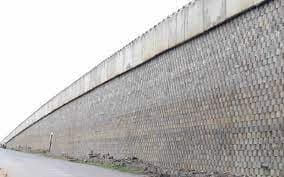 Geosynthetic Reinforced Soil Walls
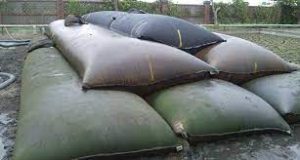 Geotextile Dewatering Bags Used for Desludging Wastewater Ponds
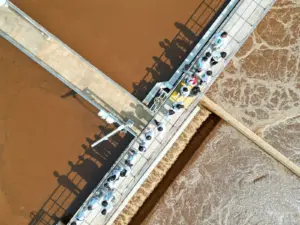 Case Study: Strengthening Environmental Protection Infrastructure with Ocean HDPE Liner 1500 Micron at a Landfill Project in Odisha