Defending Africa Against Floods: How Geosynthetics Build Climate Resilience
Across Africa, floods have become one of the most disruptive and costly natural hazards. From the swelling banks of the Niger and Nile to the flash floods that overwhelm cities like Nairobi, Lagos, Durban, and Maiduguri, rising waters are displacing millions every single year.
The Growing Flood Crisis Across Africa
Floodwaters are destroying infrastructure and washing away fertile farmland at an alarming rate. East Africa, the Sahel, and Southern Africa have all experienced devastating flood events in recent seasons, often striking communities that have the least capacity to recover.
Key Drivers of Flooding in Africa
The drivers are well understood. A combination of environmental and human factors is making floods more frequent, more intense, and harder to manage.
- Climate change is intensifying rainfall and making weather patterns less predictable.
- Rapid, often unplanned urbanisation is sealing over natural drainage paths and pushing settlements onto floodplains.
- Deforestation and poor land management are accelerating soil erosion.
- Ageing or non-existent flood defences leave riverbanks, embankments, and coastlines exposed.
The result is a continent under growing pressure to protect lives, property, and economic development from water.
Table of Contents
Why Traditional Flood Defences Fall Short
Traditional flood defences built solely from concrete and stone are expensive, slow to construct, carbon-intensive, and frequently beyond the budgets of fast-growing regions. This is where geosynthetics offer a smarter, faster, and more sustainable path forward.
What Are Geosynthetics?
Geosynthetics are engineered polymer and natural-fibre materials designed to perform specific functions in soil, water, and infrastructure projects. They are lightweight yet remarkably strong, and they can be combined with conventional materials to dramatically improve performance while reducing cost.
Core Functions
- Reinforce
- Separate
- Filter
- Drain
- Contain
- Protect
Why They Suit Africa’s Flood-Prone Regions
- Can be transported easily to remote locations.
- Can be installed quickly with local labour.
- Reduce cost when combined with conventional materials.
- Provide an ideal foundation for resilient water-management infrastructure.
At Ocean Global, we manufacture a complete range of geosynthetic products engineered for exactly these conditions. Here is how they help prevent and manage floods.
Geo Bags and Geo Tubes for Riverbank and Coastal Protection
Geo Bags
When rivers swell or coastlines erode, the soil along banks and shorelines is the first thing to give way. Geo bags, filled on site with locally available sand or soil, create durable, flexible barriers that absorb the energy of moving water and stabilise embankments. Unlike loose sandbags, they resist UV degradation and last for years.
Geo Tubes
For larger interventions, geo tubes (geotextile dewatering and containment tubes) form substantial hydraulic structures. They are quick to deploy during emergencies and equally effective as permanent flood-defence structures, making them invaluable for both rapid response and long-term planning.
Common applications include:
- Breakwaters
- Groynes
- Embankment cores
- Shoreline reinforcement
Gabion Boxes for Erosion Control and River Training
Gabion boxes, woven wire-mesh containers filled with rock, are among the most trusted tools for managing river behaviour. Placed along riverbanks, channels, and slopes, they perform several critical functions:
- Slow water velocity
- Prevent scouring
- Train rivers to flow within safe boundaries
Their permeable structure allows water to pass while holding soil in place. Because they can be built with local stone and labour, they are well suited to African projects where cost and accessibility matter.
Geotextiles for Filtration, Separation, and Embankment Strength
Synthetic Geotextiles
Beneath almost every successful flood-defence structure lies a geotextile. These versatile fabrics perform essential roles:
- Separate soil layers
- Filter out fine particles
- Allow water to drain without carrying soil away
In embankments, levees, and dykes, geotextiles prevent internal erosion and piping, the slow failure mechanism responsible for many embankment breaches during prolonged flooding.
Natural-Fibre Geotextiles
Our natural-fibre coir and jute geotextiles add a further benefit. They are biodegradable, environmentally friendly, and excellent for stabilising slopes and riverbanks while vegetation establishes.
For community and watershed projects across rural Africa, they offer an affordable, sustainable erosion-control solution that works in harmony with the landscape.
Geocells for Slope and Channel Stabilisation
Geocells are three-dimensional honeycomb structures that confine soil, gravel, or concrete to create stable, load-bearing surfaces. They prevent erosion under fast-flowing water and protect vulnerable slopes from collapse during heavy rain.
They are particularly effective for:
- Lining flood-relief channels
- Stabilising drainage channels and spillways
- Reinforcing the approaches to bridges and culverts
- Protecting steep embankments
Geomembranes and Pond Liners for Water Storage and Containment
Flood management is not only about pushing water away. It is also about capturing and storing it.
HDPE geomembranes and pond liners allow communities to build retention ponds, detention basins, and reservoirs that hold excess rainwater during storms and release it safely afterwards. This delivers a dual benefit of enormous value across much of Africa:
- Reduces downstream flooding by containing excess stormwater.
- Creates a valuable water reserve for the dry season, addressing both flood and drought in a single intervention.
Geogrids and Erosion Control Mats for Infrastructure Resilience
Roads, bridges, and railway embankments are repeatedly destroyed by floodwaters. Geogrids reinforce these structures, increasing their strength and resistance to washout.
Combined with erosion control mats and blankets, which shield exposed soil from rainfall impact and surface runoff, they help vital infrastructure survive extreme weather and remain serviceable when communities need it most.
GCCM for Rapid, Durable Channel Lining
For lining canals, channels, and slopes quickly, geosynthetic cementitious composite mats (GCCM) deliver the durability of concrete with a fraction of the installation time and effort.
Simply position the material and add water, and within hours it hardens into a strong, erosion-resistant surface, ideal for emergency repairs and permanent drainage works alike.
Building a Flood-Resilient Future
Africa’s flood challenge is significant, but it is not insurmountable. With the right materials and engineering, communities can:
- Protect riverbanks
- Strengthen embankments
- Manage stormwater
- Store water for leaner months
- Keep critical infrastructure standing through the harshest seasons
Geosynthetics make all of this faster, more affordable, and more sustainable than traditional methods alone.
Why Choose Ocean Global
With over 25 years of manufacturing experience and more than 1,000 satisfied clients, Ocean Global is proud to supply a complete range of geosynthetic solutions engineered for flood prevention and water management.
From geo bags and gabions to geomembranes, geocells, and geotextiles, our products are trusted on projects where reliability is not optional.
As African nations invest in climate resilience, the right partner makes all the difference. Get in touch with Ocean Global to discuss how our geosynthetic solutions can help protect your region against floods and build infrastructure that lasts.

source on Google
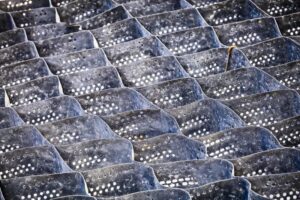 The role of Geocells for Soil Stabilization
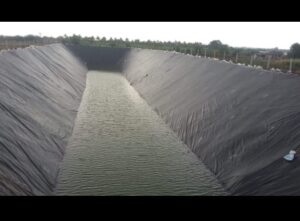 Canal Work Project at IGI Airport, Delhi
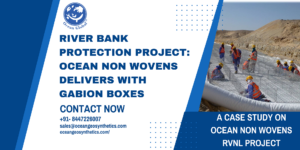 River Bank Protection Project: Ocean Non Wovens Delivers with Gabion Boxes