Geosynthetics on the Ganga Expressway: Soft-Ground Treatment on Alluvial Soil
Key takeaway
The 594 km Ganga Expressway runs across the soft alluvial soil of the Ganga plains, which is weak, wet and slow to settle. Geosynthetics make it buildable.
Biaxial geogrids reinforce the subgrade and base so the ground can carry heavy pavement loads, geotextiles separate the soft clay from the granular fill, and wick drains with geotextile filters speed up consolidation so the ground settles before the road is built rather than after.
Who this is for
Highway engineers, contractors and consultants working on expressways, national highways and embankments over soft or alluvial ground who need practical soft-ground treatment methods.
Project at a glance
| Item | Detail |
| Project | Ganga Expressway |
| Length | Around 594 km, Meerut to Prayagraj |
| Location | Uttar Pradesh, across the Ganga alluvial plains |
| Ground condition | Weak, soft alluvial silts and clays with a high water table |
| Geosynthetic methods | Biaxial geogrids, geotextile separation, wick drains with geotextile filters |
What is the Ganga Expressway, and why does the soil matter?
The Ganga Expressway is one of the longest expressways in India, running roughly 594 km from Meerut to Prayagraj across Uttar Pradesh. It is built almost entirely on the alluvial plain of the Ganga, which is some of the softest and most compressible ground in the country.
For a high-speed expressway carrying heavy freight for decades, that ground is the central engineering problem. Before a single layer of pavement can be laid, the soil underneath has to be made strong enough and stable enough to carry it, and geosynthetics are the main tools that make this possible at the scale and speed a project like this demands.
What makes alluvial soil in Uttar Pradesh difficult to build on?
Alluvial soil is deposited by the river over thousands of years, and it is fine, soft and often waterlogged. For a highway builder it creates several linked problems:
- Low bearing capacity: the soft silt and clay cannot carry a heavy pavement without deforming.
- High water table: the ground is often saturated, which weakens it further and raises pore-water pressure.
- Large settlement: soft clay compresses a great deal under the weight of an embankment.
- Slow consolidation: water drains out of clay very slowly, so natural settlement can take years.
- Differential settlement: variable ground settles unevenly, which cracks pavements and creates a rough ride.
- Weak working platform: construction plant cannot operate on soft ground until it is stabilized.
Left untreated, this ground would give an expressway that settles, cracks and ruts within a few years. The job of soft-ground treatment is to fix these problems before the pavement goes on.
How do biaxial geogrids stabilize weak subgrade?
A biaxial geogrid is a polymer grid with square or rectangular apertures, strong in both directions, made to interlock with granular material. When the grid is laid at the top of the subgrade or within the granular base and aggregate is placed over it, the stone particles push down into and lock inside the apertures.
This grip stops the aggregate spreading sideways under a wheel load, a mechanism called lateral restraint. The effect is a stiffer, stronger layer that behaves far better than unreinforced aggregate:
- It spreads wheel loads over a wider area, lowering the pressure that reaches the weak soil.
- It raises the effective bearing capacity of the ground, giving a firm working platform for construction plant.
- It resists rutting under repeated traffic and controls differential settlement.
- It allows a thinner granular section to carry the same load, which reduces imported aggregate.
For a geogrid for road construction on this kind of ground, Indian guidance IRC:SP:59 recognizes the improvement through a layer-coefficient benefit, and geogrid tensile performance is verified to ASTM D6637. This is why biaxial geogrids are a standard first step for subgrade improvement on the alluvial soil of the Ganga Expressway.
What is the role of geotextile separation on soft clay?
Geogrids reinforce, but on soft clay they need a partner. A geotextile separation layer, usually a woven or non-woven fabric, is placed between the soft subgrade and the granular fill. Its job is to keep the two apart.
Without it, the soft clay pumps up into the expensive aggregate under traffic and the aggregate punches down into the mud, so the two intermix, the base loses strength and the road fails early.
On the wet alluvial ground of Uttar Pradesh, the geotextile does two things at once. As a separator it keeps the granular layer clean and working. As a filter it lets water drain out of the subgrade while holding soil particles back, which relieves pore-water pressure.
Used with the geogrid, the geotextile keeps the reinforced layer intact for the life of the road. For a geotextile on alluvial soil highway work, opening size, permittivity and tensile strength are specified to ASTM standards and matched to the clay.
How do wick drains with geotextile filters treat deep soft clay?
Geogrids and geotextiles fix the top of the ground, but where soft clay runs deep the problem is settlement, and that is treated with wick drains. A wick drain, or prefabricated vertical drain, is a flat plastic core wrapped in a non-woven geotextile filter sleeve. Thousands of them are pushed vertically into the soft clay on a close grid.
They work by shortening the drainage distance. Water escapes from clay very slowly because it has so far to travel to reach a free surface. A wick drain gives the trapped pore water a short horizontal path to a vertical drain, so it can escape quickly.
When a surcharge of fill is then placed on top as a preload, the clay consolidates and settles in a matter of months instead of years. The geotextile sleeve is essential here: it lets water into the drain while keeping the clay particles out, so the drain does not clog.
Once the ground has settled under the surcharge, the surcharge is removed and the expressway is built on ground that has already done most of its settling. This combination of wick drains and preloading is a core part of soft-ground treatment with geosynthetics on deep alluvial deposits.
Before and after: what soft-ground treatment achieves
The table compares the same alluvial ground before and after treatment.
| Condition | Untreated alluvial soil | After geosynthetic treatment |
| Bearing capacity | Low; cannot carry heavy pavement | Raised; firm platform for construction and traffic |
| Settlement | Large and uncontrolled | Pre-settled under surcharge, then controlled |
| Consolidation time | Years to settle naturally | Months, accelerated by wick drains |
| Layer intermixing | Clay and aggregate mix, base weakens | Geotextile keeps layers clean and separated |
| Aggregate thickness | Very deep section needed | Reduced by geogrid reinforcement |
| Rutting and cracking | Early rutting and cracking likely | Resisted; longer pavement life |
Why choose geosynthetics over conventional soft-ground methods?
The traditional alternatives are full removal and replacement of the soft soil, or importing a very deep granular raft. Both are slow, expensive and heavy on material. Geosynthetics offer a better balance on a project of this length:
- Less excavation and import: the ground is improved in place rather than dug out and replaced.
- Reduced aggregate: geogrid reinforcement cuts the depth of imported stone.
- Faster programme: wick drains compress years of settlement into months, and geogrids give an immediate working platform.
- Controlled settlement: pre-settling the ground avoids the cracking and repair that late settlement causes.
- Lower cost and carbon: less material quarried and hauled over 594 km of alignment.
How is the treatment installed?
The sequence on soft alluvial ground usually runs like this:
Installation steps
- Prepare the ground: clear and level the alignment and lay a working platform where needed.
- Install wick drains: where clay is deep, push prefabricated vertical drains in on the design grid.
- Place surcharge and preload: build a temporary fill to squeeze water out and pre-settle the ground, monitoring settlement.
- Lay the geotextile separator: place the fabric on the prepared subgrade with the specified overlaps.
- Lay the biaxial geogrid: roll out the grid and place aggregate so it interlocks and confines.
- Build and compact the layers: place and compact the granular and pavement layers over the reinforced base.
- Check quality: verify geogrid aperture and strength, geotextile opening size and mass, drain spacing, overlaps and settlement records.
Common mistakes to avoid
- Insufficient geotextile overlap on soft ground
- Geogrid not properly tensioned or confined
- Wick drain spacing too wide for the required settlement time
- Building the pavement before the ground has finished consolidating
Technical specifications at a glance
| Product | Key property | Reference standard | Role |
| Biaxial Geogrid | Aperture stability, tensile strength both directions | ASTM D6637, IRC:SP:59 | Subgrade and base reinforcement |
| Woven Geotextile | Wide-width tensile strength | ASTM D4595, D4632 | Separation and basal reinforcement |
| Non-woven Geotextile | Opening size, permittivity | ASTM D4751, D4491 | Separation, filtration, drain filter |
| Wick Drain (PVD) | Discharge capacity, filter opening size | ASTM D4716, D4751 | Accelerating consolidation of soft clay |
The exact grade for any section depends on the soil, the loads and the embankment height, so the product has to be matched to the ground.
Guidance from the International Geosynthetics Society (IGS), the Geosynthetic Institute (GSI), the FHWA, IRC:SP:59, IRC:113 and the Bureau of Indian Standards supports this practice.
Where else is geogrid soil stabilization used?
The same methods apply well beyond this one expressway:
- National highways and rural roads over weak subgrade
- Embankments on soft soil, including approaches to bridges and flyovers
- Railway formations and industrial yards
- Working platforms for construction plant
- Reinforced soil walls and steep slopes
- Ports, logistics parks and container yards on reclaimed ground
Should you use geogrids for soft-ground treatment?
Geogrids, geotextiles and wick drains are usually the right choice when you are building over weak, wet or compressible ground and cannot afford large settlement or a very deep granular section.
Best suited to
- Highways and embankments on alluvial, clayey or made-up ground
- Projects on tight timelines that cannot wait years for natural settlement
- Alignments where imported aggregate is costly or far away
- Sites that need a firm working platform quickly for construction plant
Start from a soil investigation
The design should always start from a soil investigation, because the geogrid grade, the geotextile opening size and the wick drain spacing all depend on the ground.
Frequently asked questions
How do geogrids stabilize weak alluvial soil on a highway?
A biaxial geogrid is laid at the subgrade or within the granular base, where its apertures interlock with the aggregate and stop it spreading sideways under traffic. This lateral restraint stiffens the layer, spreads wheel loads over a wider area, raises the effective bearing capacity of the weak soil, and reduces rutting and differential settlement.
Why is alluvial soil in Uttar Pradesh difficult to build a highway on?
The Ganga plains are made of soft, fine silts and clays with low bearing capacity and a high water table. This ground settles under load, settles unevenly, consolidates slowly, and provides a weak platform, so it usually needs treatment before a heavy pavement can be built on it.
What is the difference between a geogrid and a geotextile in road construction?
A geogrid is an open grid that reinforces by interlocking with and confining aggregate. A geotextile is a fabric that mainly separates and filters, keeping soft soil and granular fill apart and letting water drain. On soft alluvial ground they are often used together, the geotextile as a separator and the geogrid as reinforcement.
What are wick drains and why are they used on soft clay?
Wick drains, also called prefabricated vertical drains, are plastic strips wrapped in a geotextile filter and pushed into soft clay. They give trapped pore water a short path to escape, so that under a surcharge load the clay consolidates and settles in months rather than years, before the road is built.
Does a geogrid reduce the amount of aggregate needed?
Yes. By reinforcing the granular layer, a geogrid lets a thinner section carry the same traffic, which reduces the depth of imported aggregate for the same design life. Over a long highway this saves large volumes of quarried stone, haulage and cost.
About Ocean Non Wovens
Ocean Non Wovens manufactures and supplies geogrids, woven and non-woven geotextiles, geocells, geobags and HDPE liners, tested to Indian and international specifications, for highways and expressways, soft-ground treatment, railways, water and environmental infrastructure, industrial developments and defence projects across India.
For work on weak or alluvial ground, the company can supply the correct geogrid and geotextile grades for the soil and loading, with technical support to match each product to the design. To discuss soil stabilization, separation or drainage geosynthetics for your project, contact Ocean Non Wovens.
Related: biaxial geogrids · geotextiles for separation

source on Google
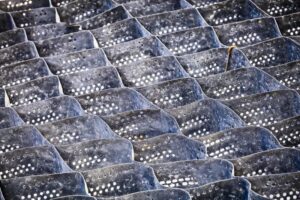 The role of Geocells for Soil Stabilization
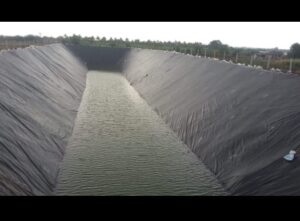 Canal Work Project at IGI Airport, Delhi
 River Bank Protection Project: Ocean Non Wovens Delivers with Gabion Boxes