HDPE Liner for Industrial Infrastructure
JSW EV Plant, Chhatrapati Sambhaji Nagar, Maharashtra
Project Overview
Project Name: JSW EV Plant
Location: Chhatrapati Sambhaji Nagar, Maharashtra
Product Used: Ocean HDPE Liner – 300 Micron
Quantity: 11,152 Kg
Table of Contents
Introduction
The rapid expansion of electric vehicle manufacturing in India has led to the development of highly sophisticated industrial facilities where environmental safety, structural durability, and contamination control are critical design priorities. Unlike conventional industrial setups, EV plants involve exposure to process chemicals, lubricants, wastewater streams, and thermal variations, all of which can compromise subgrade stability and structural integrity if not properly managed.
In this project, Ocean HDPE Liner (300 Micron) was incorporated as a geomembrane containment and protection system to create an impermeable barrier between industrial operations and the underlying soil. The liner played a vital role in ensuring leak prevention, moisture isolation, and long-term environmental protection within the facility.
Engineering Role of HDPE Liners in Industrial Infrastructure
HDPE geomembranes are widely recognized in geotechnical engineering for their exceptional impermeability, chemical resistance, and mechanical strength. In industrial environments, they serve as a primary containment layer as well as a secondary protective barrier.
Key Functional Applications
- Effluent Containment Systems: Prevent leakage of industrial wastewater into surrounding soil
- Subgrade Isolation: Protect foundation layers from moisture and chemical infiltration
- Drainage Channel Lining: Ensure controlled flow of liquids without seepage losses
- Chemical Storage Zones: Act as a barrier against aggressive substances
HDPE liners are particularly effective in industrial zones where hazardous liquids and process waste must be managed in compliance with environmental regulations.
According to the Central Pollution Control Board (CPCB), impermeable liner systems are essential in industrial facilities to prevent groundwater contamination and soil degradation.
Source: CPCB Guidelines for Industrial Waste Management
Role of Geosynthetics in Industrial Ecosystems
Industrial infrastructure increasingly relies on integrated geosynthetic systems to enhance performance and sustainability.
Broader Applications
1. Soil Stabilization and Load Distribution
Geotextiles and geogrids are used to improve bearing capacity and reduce settlement under heavy industrial loads.
2. Pavement Reinforcement
Industrial traffic areas benefit from geosynthetics that reduce rutting and fatigue damage, extending pavement life.
3. Drainage and Filtration Systems
Geocomposites enable efficient liquid flow management, preventing accumulation beneath structures.
4. Environmental Protection Systems
Geomembranes such as HDPE are critical in containment ponds, hazardous waste zones, and chemical processing areas.
Studies indicate that properly designed containment systems using geomembranes can reduce environmental risk by over 90% compared to unlined systems.
Source: USEPA, Landfill and Containment Design Practices
Site-Specific Challenges at the JSW EV Plant
1. Chemical Exposure
Industrial processes within EV manufacturing involve:
- Electrolytes and chemical compounds
- Industrial lubricants and oils
- Process wastewater
These substances can penetrate untreated soil, leading to long-term environmental hazards.
2. Heavy Load Conditions
The facility experiences:
- Movement of heavy machinery
- Static loads from industrial equipment
- Repetitive stress from operations
Such loads can cause subgrade deformation and liner stress if not properly designed.
3. Temperature Variability
Industrial zones often experience:
- Elevated temperatures from machinery
- Thermal expansion and contraction cycles
These factors can impact material behavior, especially if installation allowances are not considered.
Installation Methodology and Quality Control
The effectiveness of HDPE geomembranes in industrial applications depends heavily on installation precision and rigorous quality assurance.
Subgrade Preparation
- Removal of sharp aggregates and debris
- Proper compaction to achieve uniform support
- Ensuring slope for drainage efficiency
Liner Deployment
- Controlled unrolling to minimize wrinkles
- Alignment with drainage and containment design
- Allowance for thermal expansion
Seaming and Welding
- Use of extrusion or hot wedge welding techniques
- Non-destructive testing such as air pressure testing
- Visual inspection of weld integrity
Protection Measures
- Placement of cushioning geotextiles where required
- Preventing damage during construction activities
- Careful sequencing of installation and overlying works
Even minor defects such as pinholes or weak seams can compromise containment systems, making quality control a critical component of execution.
Long-Term Performance and Environmental Resistance
HDPE liners are engineered for long-term durability in aggressive environments, making them ideal for industrial applications.
Key Performance Characteristics
- Low Permeability: Prevents seepage of hazardous liquids
- High Chemical Resistance: Withstands acids, alkalis, and hydrocarbons
- Mechanical Strength: Resists puncture and tensile stress
- Thermal Stability: Performs reliably under temperature variations
Research shows that HDPE geomembranes, when properly installed and protected, can achieve service lives of 30–50 years in industrial environments.
Source: Koerner, R.M., Designing with Geosynthetics
Maintenance and Lifecycle Benefits
The use of HDPE liners significantly reduces long-term operational risks and maintenance costs.
Key Advantages
- Prevention of soil and groundwater contamination
- Reduced structural damage due to moisture ingress
- Lower repair and remediation costs
- Compliance with environmental regulations
Lifecycle assessments indicate that containment systems using geomembranes can reduce remediation costs by up to 40% over the project lifespan.
Conclusion
The JSW EV Plant project in Chhatrapati Sambhaji Nagar demonstrates the critical importance of HDPE geomembranes in industrial infrastructure. By providing a reliable barrier against chemical exposure, moisture intrusion, and subgrade instability, the liner system ensures both structural integrity and environmental protection. In high-performance industrial environments, such solutions are essential for achieving long-term operational efficiency and regulatory compliance.
Final Note
Ocean Non Wovens continues to support India’s evolving industrial landscape with high-performance geosynthetic solutions tailored for complex applications. With strong expertise in HDPE geomembranes, advanced manufacturing capabilities, and a deep understanding of industrial site conditions, the company delivers reliable containment and protection systems across sectors. From EV manufacturing plants to large-scale infrastructure developments, Ocean Non Wovens remains a trusted partner for executing geosynthetics projects with precision, durability, and long-term performance assurance.
 Ocean Non-Wovens: Your Trusted Geomembrane Supplier for Superior Solutions
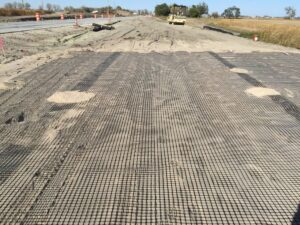 How Ocean Non-Wovens Biaxial Geogrid helped ensure the success of a construction project in Bhubaneswar, Odisha
 Leading Geotextile Fabric Manufacturer in Nepal