Irrigation Department Work Project at Patna – Case Study
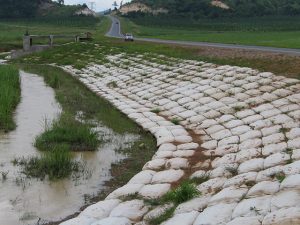
For an Irrigation Department work project at Patna, Bihar, Ocean supplied 20000 Ocean Geobags-300 GSM. The bags protect irrigation and drainage works against the floods and waterlogging that hit Bihar’s farmland in heavy monsoon years.
- Product: Ocean Geobags-300 GSM
- Quantity: 20000 Bags
- Location: Patna, Bihar
Problem
Farmers in Bihar depend on the monsoon for Kharif crops, mainly paddy. In the season described in the project brief, unexpectedly heavy rain in June waterlogged fields and destroyed paddy seedlings, leaving marginal farmers struggling to raise seedlings and facing difficult transplanting if July rains were also above normal.
Surplus rain in the catchments of the state’s major rivers and in neighbouring Nepal, including the Gandak, Burhi Gandak, Bagmati and Koshi, caused floods in nearly a dozen districts. Thousands of people were displaced from marooned villages and took refuge on embankments and national highways. Embankments, canal banks and drainage structures take the brunt of these floods, and once their slopes and toes erode, they breach.
Solution
Geo Bags are large bags sewn from non-woven geotextile and filled with sand or local soil on site. Placed in layers on an embankment slope, at the toe of a bank or across a breach, they form a heavy, flexible protection layer that resists the scouring action of flowing water.
Why geobags suit this work
- Water passes, soil stays: the geotextile is permeable but retains the fill, so water pressure does not build up behind the bags while the sand stays inside.
- Local fill: bags can be filled with river sand dug nearby, which avoids hauling stone or making concrete blocks, and is usually cheaper.
- Flexibility: a layer of bags settles with the bank and follows scour holes instead of cracking like rigid protection.
- Durability: synthetic geotextile does not rot, resists acids, alkalis and insects, and is non-toxic to surrounding soil and water. UV stabilisation slows degradation where bags are exposed, but long-exposed bags should be covered or inspected and replaced over time.
- Vegetation: soil-filled bags can be planted to green a slope, which is used in riverbank, highway slope and mine restoration work.
Choosing the fabric weight
The 300 GSM fabric balances strength against cost for bags handled and placed by hand or light equipment. Heavier fabrics are used for larger bags dropped from barges or placed in fast currents, where abrasion and impact are higher. Whatever the weight, the fabric’s opening size should retain the sand used as fill.

source on Google
 Case Study: Preventing Landslides in Nanded, Maharashtra with Ocean HDPE Liner – 1000 Micron
 The Ultimate Guide To Geotextile Fabric
 Case Study: Building a Sustainable Oil Pit Storage System in Kharsang, Arunachal Pradesh Using Ocean HDPE Liner – 1500 Micron