Geotextile and Drain Cells for a Park Landscaping Project in Ranchi
A neglected public park in Ranchi, Jharkhand, was being rebuilt as a place for relaxation and recreation, but the ground was working against it. Poor drainage left the site waterlogged, the soil was settling unevenly, and weeds threatened to overrun the new planting. For this landscaping project, Ocean Non Wovens supplied Ocean NonWoven Geotextile-1.5MM and 57,000 sqm of Ocean Drain Cell-20MM, and the project engineers built the drainage and separation layers around them.
Ranchi gets a heavy south-west monsoon, and much of the plateau has clayey, slow-draining soil. A park that cannot shed water in July loses its lawns and planting, and its paths start to sink.
Ocean NonWoven Geotextile-1.5MM: separation and filtration
The Ocean NonWoven Geotextile-1.5MM was laid across the entire designated area, forming a barrier between the native soil and the new landscaping materials. A needle-punched non-woven geotextile does two jobs here:
- Separation: it stops soil layers mixing. Different soils compact and drain differently, and once they intermix the ground settles unevenly. The geotextile keeps the new gravel and topsoil distinct from the native soil, so they do not sink into it or wash away.
- Filtration: water passes through the fabric freely while soil particles are held back. Excess water drains down instead of building up around roots, and the drainage layer below stays clean of fines.
Ocean Drain Cell-20MM: a void layer for drainage
Drain cells are interlocking HDPE panels, 20 mm deep in this grade, moulded with cups and supports that leave a continuous void space beneath the landscaped area. They are a different product from geocells, which are expanded honeycomb panels filled with soil or aggregate for confinement. A drain cell layer replaces a thick bed of drainage gravel with a thin, light layer that carries water sideways to outlets.
- Drainage: the interconnected voids form a drainage channel across the whole area, so excess water runs off to the drains instead of saturating the root zone. The cups also hold a small amount of water that plants can draw on in dry spells.
- Load support: the panels are made to carry the soil and foot-traffic loads placed on them while keeping the void open, which helps the surface stay even in busy parts of the park.
In a typical drain cell system, a geotextile filter sits directly on top of the cells so soil cannot wash into the voids and block them; the geotextile and drain cell work as a pair.
What the system delivers
- Drainage: no more standing water, and a healthier root zone for the new planting.
- Stability: the geotextile’s separation and filtration, together with the drain cell layer, give the landscaped area a more stable base that settles less.
- Lower maintenance: by suppressing weed growth and preventing soil erosion, the geosynthetics reduce long-term upkeep.
The same geotextile and drain cell combination is used for roof gardens, podium landscaping over basements, sports fields and planters. Ocean Non Wovens Pvt Ltd supplies geosynthetics for landscaping and drainage projects. Contact us to discuss your next project.

source on Google
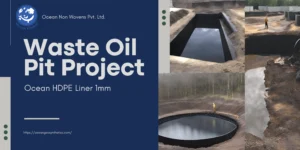 Ocean HDPE Liner 1mm in the Waste Oil Pit Project, Durgapur, West Bengal
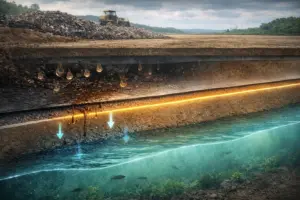 Landfill Protection Using GCL
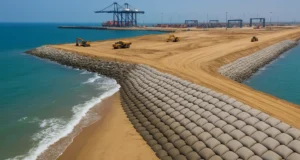 Tuna Tekra Container Development with Ocean Non Woven Geobags
