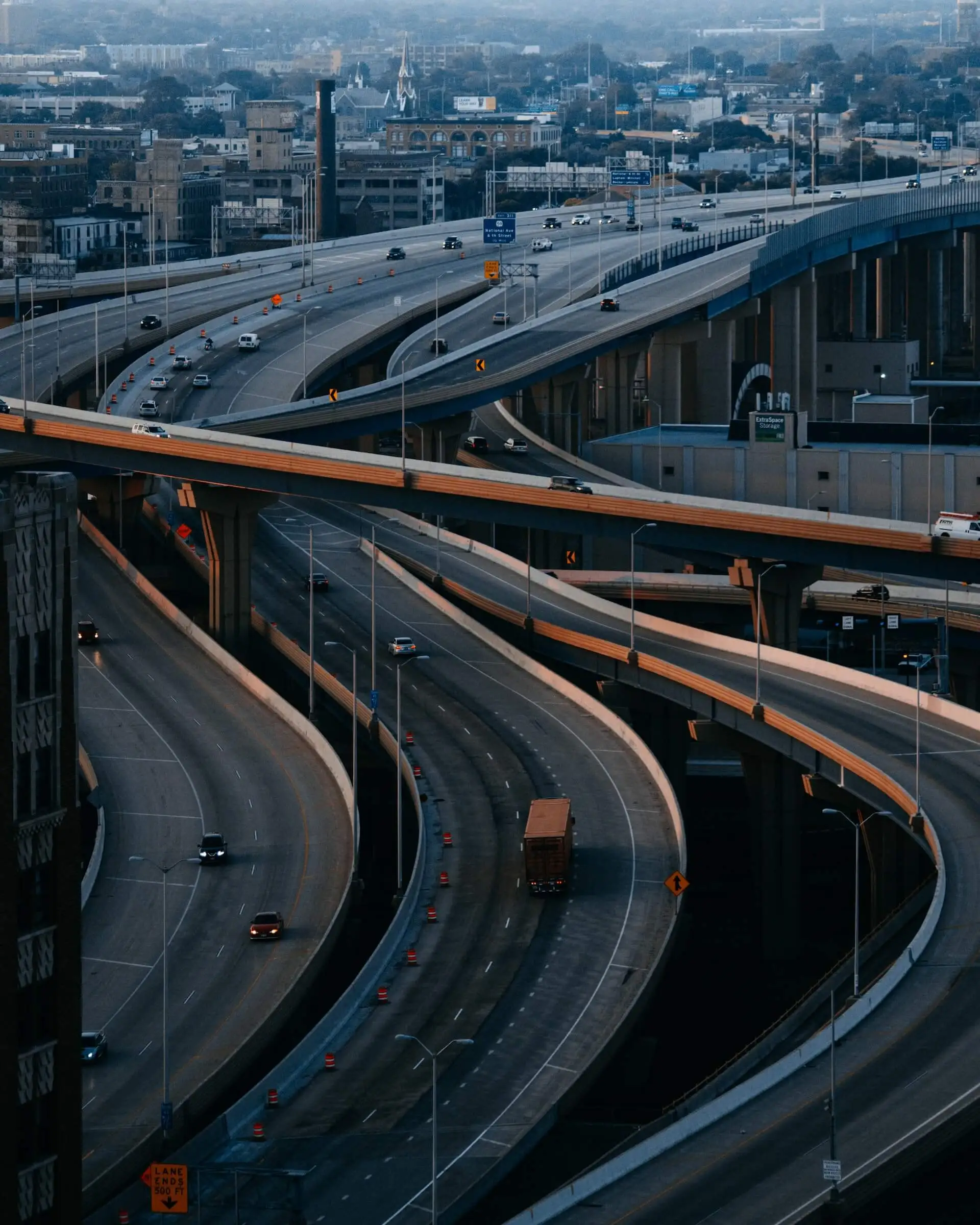
Advanced Landfill Containment System with Ocean HDPE Liner 1.5 MM at Srinagar, Uttarakhand
At the Landfill Project in Srinagar, Uttarakhand, Ocean Non Wovens supplied and installed Ocean HDPE Liner 1.5 MM across 1080 SQM as the containment barrier. The liner’s job is to stop leachate from the waste reaching the soil and groundwater below, on a hill-town site where slopes, rain and access all make that harder.
Project overview
- Project Type: Landfill Project
- Location: Srinagar, Uttarakhand
- Product Used: Ocean HDPE Liner 1.5 MM
- Quantity: 1080 SQM
- Scope: Supply & Installation
On the same project, Ocean also supplied 285 GSM non-woven geotextile for cushioning and filtration alongside the liner.
Why a landfill needs an HDPE liner
Rainwater passing through waste becomes leachate, which carries heavy metals, ammonia, organic compounds and other contaminants. Without a barrier, it moves down into the soil and groundwater. Older dumps in India were built without one, and modern landfill design under the Solid Waste Management Rules, 2016 calls for a composite base liner: a 1.5 mm HDPE geomembrane (or equivalent) over a compacted low-permeability clay layer, with a leachate collection system above.
An HDPE geomembrane suits this duty because it has:
- Extremely low permeability
- Chemical resistance to the acids, alkalis and salts found in leachate
- Puncture resistance
- UV stability from its carbon black content
- Long-term durability when buried
The 1.5 MM thickness gives more margin against puncture, waste loading and installation stress than thinner pond-lining grades. For landfill work, GRI-GM13 is the usual reference specification for HDPE geomembrane properties such as density, tensile strength, carbon black content and oxidative induction time.
Building a liner in the hills
Srinagar sits in the Alaknanda valley in Pauri Garhwal district, and hill sites add their own problems:
- Slope stability: on steep side slopes, the liner can slide on the soil or on the layers above it. Anchor trenches at the crest and, where needed, textured sheet increase friction.
- Rainfall: Uttarakhand’s monsoon rain is heavy and hard to predict. Wet subgrade and damp sheet surfaces make preparation and welding harder, so welding has to stop when the sheet is wet.
- Transport: heavy geomembrane rolls and welding equipment have to come up narrow mountain roads, which needs planning around roll size and vehicle access.
- Drainage: groundwater or trapped gas under the liner builds uplift pressure and stresses the sheet, so the subgrade needs a drainage path.
Installation and quality control
Most liner leaks trace back to seams and installation damage, not to the sheet itself. Quality control on this installation included:
- Trial seam testing at the start of each welding session
- Vacuum box testing of extrusion welds and patches
- Air pressure seam testing of double-track fusion welds
- Subgrade inspection before deployment
- Thickness verification
The usual references for these tests are ASTM D5641 (vacuum box), ASTM D5820 (air pressure testing of dual seams) and ASTM D6392 (peel and shear strength of seam samples).
Long-term performance
A landfill liner is expected to work for decades. Its life depends on:
- Waste loading pressure
- Chemical exposure
- Oxidative aging, which antioxidant packages slow down
- Temperature variation
- Settlement movement
Monitoring wells and leachate collection records show whether the containment is holding over the landfill’s life.
Ocean Non Wovens supplies and installs HDPE liners, geotextiles and other geosynthetics for landfill and waste management projects across India. See more case studies or contact the team about your containment design.

source on Google
 Case Study: Enhancing Sustainability in Allahabad’s Bioenergy Project with Ocean HDPE Liners
 Geotextiles in Pavement and Drainage Applications
 Reliance Project, Jabalpur (Madhya Pradesh): Application of Non Woven Geotextiles for Ground Stabilisation and Drainage Performance