Case Study: Enhancing Road Infrastructure with Ocean Geocomposite 710 GSM for NHAI in Balaghat, MP
Ocean Non Wovens supplied 10,000 SQM of Ocean Geocomposite 710 GSM to a National Highways Authority of India (NHAI) highway project in Balaghat, Madhya Pradesh. The material went in for subsurface drainage and soil stabilisation on a stretch with weak subgrade, where trapped water under the pavement would otherwise soften the soil and shorten the road’s life.
Project details
- Client: National Highways Authority of India (NHAI)
- Location: Balaghat, Madhya Pradesh
- Product Supplied: Ocean Geocomposite 710 GSM
- Quantity Used: 10,000 SQM
- Purpose: Subsurface drainage and soil stabilisation
Why water is the problem under a highway
Balaghat, in south-eastern Madhya Pradesh in the Wainganga basin, gets a heavy monsoon. On a fine-grained, weak subgrade, water that seeps into the pavement and cannot get out lowers the soil’s bearing capacity. Under repeated wheel loads that shows up as rutting, potholes, cracking and differential settlement. Removing water quickly from the pavement layers is one of the cheapest ways to protect a road.
Geosynthetics (geocomposites, geotextiles, geomembranes and geogrids) are now routine in Indian highway work for drainage, separation and reinforcement. The Indian Roads Congress guideline IRC:SP:59-2019 covers their use in road pavements and associated works.
Ocean Geocomposite 710 GSM
Ocean Geocomposite 710 GSM combines geotextile and geonet. The geonet core carries water along its plane, and the geotextile bonded to it filters the soil so fines do not clog the core. Its main functions are drainage, filtration and separation.
- Tensile strength: survives installation and the loads placed on it during construction.
- Drainage capacity: carries water away in-plane, preventing build-up beneath the pavement. Drainage geocomposites are rated by in-plane flow capacity (transmissivity, ASTM D4716) under a given normal load.
- Durability: polymer construction resists environmental stressors over the long term.
- Chemical and biological resistance: does not rot or degrade chemically in varying soil conditions.
How it was used at Balaghat
Subsurface drainage
Poor drainage leads to pavement distress, rutting and potholes. With the geocomposite in place, water drains from beneath the pavement layers instead of accumulating there.
Soil stabilisation
The Balaghat site had weak subgrade conditions. A drained subgrade stays stronger, and the geotextile layer keeps subgrade fines from pumping up into the granular layers above. Together these improve load distribution and reduce differential settlement. Where real soil reinforcement is needed, a geogrid does that job.
Lower maintenance
Roads whose subgrade stays dry and separated from the base deteriorate more slowly, so they need fewer repairs between overlays.
Other benefits
- Less aggregate: a thin geocomposite can replace part of a graded granular drainage layer, reducing demand for natural aggregate and the haulage emissions that come with it.
- Faster construction: rolls install quickly and can reduce the excavation and replacement of poor soil.
- Monsoon performance: keeping moisture out of the pavement layers protects the road through heavy rain as well as summer heat.
Work with Ocean Non Wovens
Ocean Non Wovens manufactures and supplies geosynthetics for highways, railways and landfills. For another NHAI supply, see our geocomposite case study from Patna, Bihar. Contact us to discuss drainage and stabilisation on your project.

source on Google
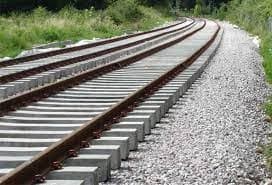 Geosynthetics for Railway ballast stabilization
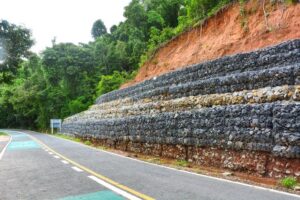 Landslide Protection and Slope Protection With Gabion Retaining Wall
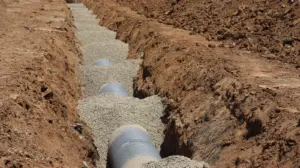 Advanced Leachate Drainage Infrastructure with Ocean Drainage Geocomposite 5.5 MM in Odisha Landfill Project