Definitive Guide to Effective Landslide Prevention Techniques: Insights from Ocean Global Geosynthetics Products
Landslides block roads, bury houses and kill people every monsoon in India’s hill states. Most are triggered by water: heavy rain raises the pore water pressure in a slope until the soil or weathered rock can no longer hold itself up. Road cuts that remove the toe of a slope, deforestation and earthquakes add to the risk. Prevention means finding out why a particular slope is unstable and then dealing with that cause, usually through a combination of drainage, retaining structures and surface protection. This guide covers those techniques and where geosynthetics fit in.
Table of Contents
Understanding the Terrain and Site Evaluation:
Start with a site investigation. Geological mapping, boreholes or test pits, and a study of groundwater and surface water flow show what the slope is made of, where it is likely to fail and what will trigger it. Only then can an engineer choose measures that address the actual mechanism, whether that is shallow surface erosion, a deep-seated slip or rockfall from a cut face.
Implementing Effective Drainage Systems:
Drainage is usually the most cost-effective measure, because saturation is the most common trigger. Surface drains (catch-water drains along the top of the slope, and lined chutes down it) stop runoff soaking in. Subsurface drains, such as trench drains, horizontal drains drilled into the slope, and drainage cells behind walls, lower the water table inside the slope. A geotextile filter around each subsurface drain keeps soil fines from clogging it.
Using Retaining Structures:
Retaining walls, stabilising piles and terracing resist the downslope pull of gravity on the soil mass. On hill roads, gabion walls are common: they are flexible, tolerate some settlement, and drain freely, so water pressure does not build up behind them. Reinforced soil walls and slopes, built with geogrids or high-strength geotextiles, are another option where space or loads call for them. Each structure has to be designed for the site’s soil, water and loading.
Using Ocean Global Geosynthetics Products:
Ocean Global supplies several geosynthetics used on unstable slopes: geotextiles, coir erosion control products, gabions, rockfall protection systems and erosion control mats. Ocean rockfall barriers have been used on landslide prevention projects in Uttarakhand and Wayanad, Kerala.
The Role of Geotextiles in Landslide Prevention:
Geotextiles do three jobs on a slope. Non-woven geotextiles act as filters around drains and behind walls, letting water out while keeping soil in. They also separate fill from the natural ground. High-strength woven geotextiles can be laid in layers within a fill slope as reinforcement, adding tensile strength the soil does not have and spreading loads. None of this works unless the geotextile is chosen for the soil it sits against and installed with proper overlaps and anchorage.
Coir Erosion Control Products:
Coir erosion control products are made from coconut fibre. Laid as nets or blankets on a bare slope, they hold the surface soil and seed in place against rain and runoff, and keep moisture in so grass and shrubs can establish. As the coir biodegrades over a few years, plant roots take over the job of binding the topsoil. Coir protects against surface erosion and shallow slips; it does not stop deep-seated landslides, which need drainage or structural measures. See Ocean’s coir geotextile project in Kullu for an example.
Community Education and Training:
Engineering works are only part of the answer. People living on landslide-prone slopes can be trained to spot warning signs, such as new cracks in the ground or walls, tilting trees and poles, springs appearing or drying up, and muddy water in streams, and to report them and move out of danger in time. Local authorities can add rainfall thresholds and early-warning alerts.

source on Google
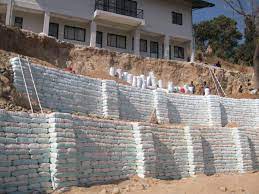 How do retaining walls prevent landslides?
 Reservoir Project Success: Using HDPE Liner and Geotextiles by Ocean Non Wovens
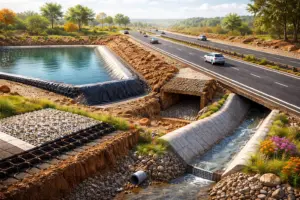 The Ultimate Guide to Geosynthetics in Infrastructure Projects in India