Landfill Protection Using GCL
Rishikesh, Uttarakhand
Project overview
Project Name: Landfill Project
Location: Rishikesh, Uttarakhand
Product Used: Ocean Geosynthetic Clay Liner (GCL), 6 MM
Quantity: 4,326 SQM
The barrier layer of a landfill is what stops leachate, the contaminated liquid that drains out of waste, from reaching the soil and aquifers below. At the Rishikesh Landfill Project, Ocean Geosynthetic Clay Liner (GCL) 6 MM was used as the hydraulic barrier within the containment system. Rishikesh sits on the Ganga at the foot of the Himalaya, so groundwater and river protection were central to the design, and the hilly, uneven terrain made a factory-made liner more practical than a thick compacted clay layer.
What a GCL does in a landfill
A Geosynthetic Clay Liner is sodium bentonite clay encapsulated between geotextile layers. When hydrated, the bentonite expands into a low-permeability gel that closes off paths for liquid. Typical hydraulic conductivity for a hydrated, confined GCL is around 1×10⁻⁹ to 5×10⁻⁹ cm/s (1×10⁻¹¹ to 5×10⁻¹¹ m/s), comparable to or lower than a well-built compacted clay liner, in a layer only millimetres thick.
In a landfill, a GCL is used for:
- Leachate containment: limiting downward seepage of leachate into the subsoil
- Groundwater protection: a barrier between waste and the aquifer
- Base lining: part of the liner system beneath the waste
- Capping: in closure covers, to limit rainwater infiltration into the waste
The layers in a landfill liner system
Landfills rely on several geosynthetics working together:
- Geomembranes (HDPE liners): the primary barrier against leachate migration.
- Geosynthetic Clay Liners: placed beneath the geomembrane to form a composite liner. If the geomembrane is punctured, the bentonite below limits leakage through the hole and can swell to seal small defects.
- Geotextiles: filtration, separation and cushioning of the layers above and below.
- Geocomposites: drainage and leachate collection above the liner.
Each layer backs up the others, so one defect does not become a leak to groundwater.
Site conditions in Rishikesh
1. Environmentally sensitive location
Rishikesh lies close to ecologically significant areas, where groundwater protection is critical, soil contamination has to be kept to a minimum and environmental regulation is strict.
2. Variable terrain and subgrade
The site has mixed soil profiles with variable permeability, uneven ground that needed careful grading, and a risk of differential settlement. A compacted clay liner is hard to build to a uniform standard on such ground; a GCL arrives with its bentonite content fixed in the factory.
3. Rainfall and surface water
Seasonal rainfall increases leachate generation and the hydraulic head on the liner, and raises the risk of infiltration if the barrier is inadequate. Once hydrated and confined, a GCL keeps its low permeability under that head.
Installation and quality control
A GCL performs only as well as it is installed.
Subgrade preparation
- Smooth grading and removal of sharp objects
- A firm, uniform base
- Correct slope for drainage
Placement
- Panels unrolled with minimal disturbance, never dragged over the subgrade
- Edges overlapped to keep the barrier continuous
- No hydration before placement and cover
Overlaps
- Overlap widths as recommended by the manufacturer
- Supplementary bentonite at overlaps where required
- Tight contact between the overlapping panels
Protection
- Prompt cover with the geomembrane or soil layer
- No equipment or foot traffic directly on exposed GCL
- No exposure to excess moisture before confinement
Early hydration or a short overlap can undo the barrier, so installation discipline matters as much as the product.
Long-term performance
- Self-sealing: bentonite swells on hydration and closes minor punctures or defects
- Low hydraulic conductivity: maintained as long as the GCL stays hydrated and confined
- Flexibility: tolerates minor subgrade movement without the cracking seen in compacted clay
- Chemical compatibility: suitable for most municipal leachates, but calcium- or magnesium-rich leachate can exchange with the sodium in the bentonite and reduce swelling, so leachate chemistry should be checked during design
Repeated wet-dry cycles without enough cover can crack desiccated bentonite, which is why GCLs in caps and on exposed slopes need adequate soil cover.
Lifecycle benefits
A well-installed GCL lowers the risk of leachate leakage and the remediation costs that follow, helps the landfill meet regulatory requirements and avoids the cracking and inconsistency of field-built clay liners. For a site near the Ganga in a high-rainfall hill town, it gives the base of the landfill a thin, predictable barrier that protects soil and groundwater.
About Ocean Non Wovens
Ocean Non Wovens supplies GCLs, geomembranes and integrated liner materials for environmental protection and infrastructure projects across India, from landfill containment to geotechnical works. See more geosynthetics for waste management, or the HDPE geomembranes used with GCLs in composite liners.

source on Google
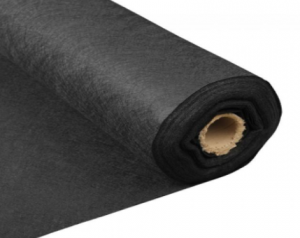 Non-Woven Geotextile Drainage Fabric | Sizes, Specs, Prices
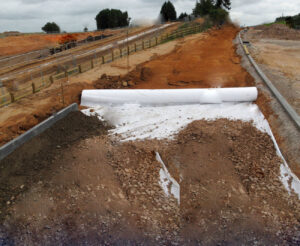 Uses of Geotextile bags
 Case Study: Ocean Non Wovens’ Contribution to the iPhone Factory Construction in Bengaluru