Ocean Non Wovens Uses HDPE Sheet for Road Construction Project at Champai, Mizoram

On a road construction project in Champai, Mizoram, Ocean Non Wovens supplied and installed 40200 sqm of Ocean HDPE Sheet to protect the road structure from water. Champai is a hill district on the Myanmar border with a long, heavy monsoon. On roads like these, water soaking into the subgrade is one of the main reasons pavements soften, rut and break up.
The road construction project
The project covered a total area of 40200 sqm. Ocean’s team worked with the construction company on a layout suited to the road. The HDPE Sheet, a high-density polyethylene geomembrane, was chosen for its tensile strength, puncture resistance and UV stability, which let it survive construction traffic and exposure on site.
The team laid the HDPE Sheet beneath the road layers in overlapping sections and welded them together with specialised equipment to form a continuous barrier. An HDPE sheet has very low permeability, so a welded layer stops rain and surface water from soaking down into the subgrade and stops water from below rising into the pavement layers. A drier subgrade keeps its strength.
What the HDPE sheet does for the road
- Moisture barrier: keeps the subgrade from getting saturated during the monsoon, which is when weak subgrades lose most of their bearing capacity.
- Protection of the road base: a dry, stable foundation helps extend the life of the road and reduces maintenance.
- More even surface: less moisture-driven settlement means a smoother, more stable surface for drivers and passengers.
An HDPE sheet is a barrier, not reinforcement: it does not add structural strength the way a geogrid does. Where a road also needs reinforcement or separation over soft soil, geogrids or geotextiles are used alongside or instead. In concrete roads, a polyethylene sheet is also commonly used as a separation membrane between the dry lean concrete base and the pavement quality concrete, as set out in IRC:15.
HDPE sheet properties
HDPE sheet is light for its area, quick to install and can be cut and welded to suit each project. It resists chemicals, does not rot and lasts a long time once covered, which makes it cost-effective over a road’s life. Before laying, the formation should be smooth and free of sharp stones; on angular subgrades, a non-woven geotextile cushion underneath protects the sheet from puncture. HDPE is also recyclable.
Ocean Non Wovens’ HDPE sheet products
Ocean Non Wovens supplies HDPE sheets in a range of thicknesses, with installation, maintenance and repair services. Its team works with clients on road and other infrastructure projects to match the sheet to the job. Browse more case studies and other geosynthetics applications, or contact us to discuss your project.

source on Google
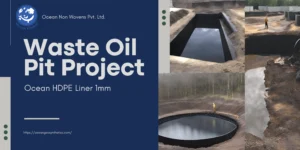 Ocean HDPE Liner 1mm in the Waste Oil Pit Project, Durgapur, West Bengal
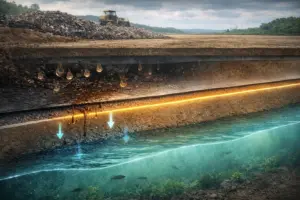 Landfill Protection Using GCL
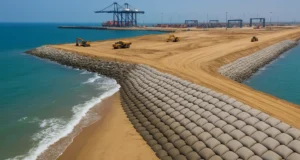 Tuna Tekra Container Development with Ocean Non Woven Geobags
