Kailasa Hills Project: Strengthening Infrastructure with Ocean Non Wovens’ Geosynthetics
At the Kailasa Hills project in Chintamani, Karnataka, Ocean Non Wovens supplied and installed 2300 SQM of geosynthetics for soil stabilisation, erosion control and reinforcement. The site has steep gradients, high erosion rates and variable soils, so the package combined four product types, each placed where it does one job: geotextiles on the slopes, geogrids in roadbeds and embankments, drainage composites under soil layers and HDPE geomembrane in the water retention areas.
Project overview
Location: Chintamani, Karnataka
Project Name: Kailasa Hills
Geosynthetic Material Supplied: 2300 SQM of Ocean Non Wovens’ geosynthetics
Objective: Reinforcement, erosion control and long-term soil stability
Products used and where
Geotextiles
- Function: Separation, filtration and erosion protection
- Material: High-tensile non woven polypropylene
- Application: Installed on the slopes to prevent soil erosion and improve load distribution.
On a slope, a non woven geotextile holds the soil surface in place while letting water drain through, so rain runoff cannot wash the fines out. Under a cover layer, it also stops the soil and cover material from mixing.
Geomembranes
- Function: Waterproofing and containment
- Material: HDPE (high-density polyethylene)
- Application: Used in water retention areas to prevent seepage and improve water management.
An HDPE geomembrane is effectively impermeable, so lined ponds keep the water they collect instead of losing it to the ground. Covered by soil or water, HDPE made to GRI-GM13 is expected to last for decades.
Geogrids
- Function: Soil stabilisation and reinforcement
- Material: High-strength polymer grids
- Application: Used in roadbeds and embankments to distribute loads evenly and prevent subsidence.
Aggregate and soil lock into the geogrid apertures, so the grid carries tension the soil cannot and restrains it from spreading sideways. In an embankment, layers of geogrid let the fill stand at a steeper angle; in a roadbed, they reduce rutting.
Drainage composites
- Function: Drainage and soil stabilisation
- Material: Polymeric core with a geotextile filter
- Application: Installed beneath soil layers to drain water, reducing hydrostatic pressure and improving slope stability.
Water trapped in a slope raises pore pressure and lowers the soil’s shear strength, which is a common trigger for slope failure after heavy rain. A drainage geocomposite gives that water a fast path out.
Material selection
- UV resistance: The geosynthetics supplied were UV-treated for the periods they are exposed.
- Microbial and chemical resistance: The geotextiles and geomembranes were tested for resistance to microbial growth, for use in organic-rich soil.
- Site-specific supply: Materials were customised to suit the terrain at Kailasa Hills.
- Load analysis: The geogrids were selected from a load-bearing analysis, to get the required stability with as little material as possible.
- Less quarried material: Geosynthetics reduce the gravel and sand needed for drainage and stabilisation layers.
Results
- Slope stability: Improved with geogrid-reinforced soil layers.
- Erosion: Erosion and sediment loss reduced by over 60%.
- Roads: Better durability from geotextile-stabilised subgrades.
- Water conservation: Through geomembrane-lined reservoirs.
For slope stabilisation, erosion control or reinforcement on hilly sites, contact Ocean Non Wovens, or see more case studies and the full range of geosynthetics.

source on Google
 Geo-Tubes as Sea Walls to check Coastal Erosion in Andhra Pradesh
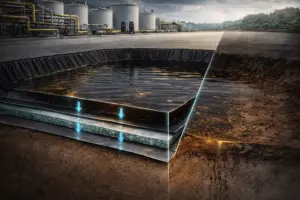 Oil Pit Containment System
 Blanket Hydro Ceiling In Terrain Area – Nagaland Case Study