Drainage Cell
Drain cells manufacturers and suppliers in India
Ocean Geosynthetics manufactures drain cells (also called drainage cells or drainage mats): interlocking plastic modules that create a free-draining void layer under soil, on roof slabs, behind walls and under sports turf. The sizes most in demand are HDPE 13 mm flexo drain cells, 20 mm drain cells and 30 mm drain cells.
Table of Contents
What are drainage cells?
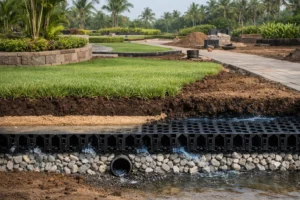
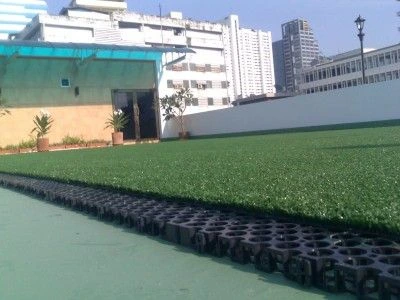
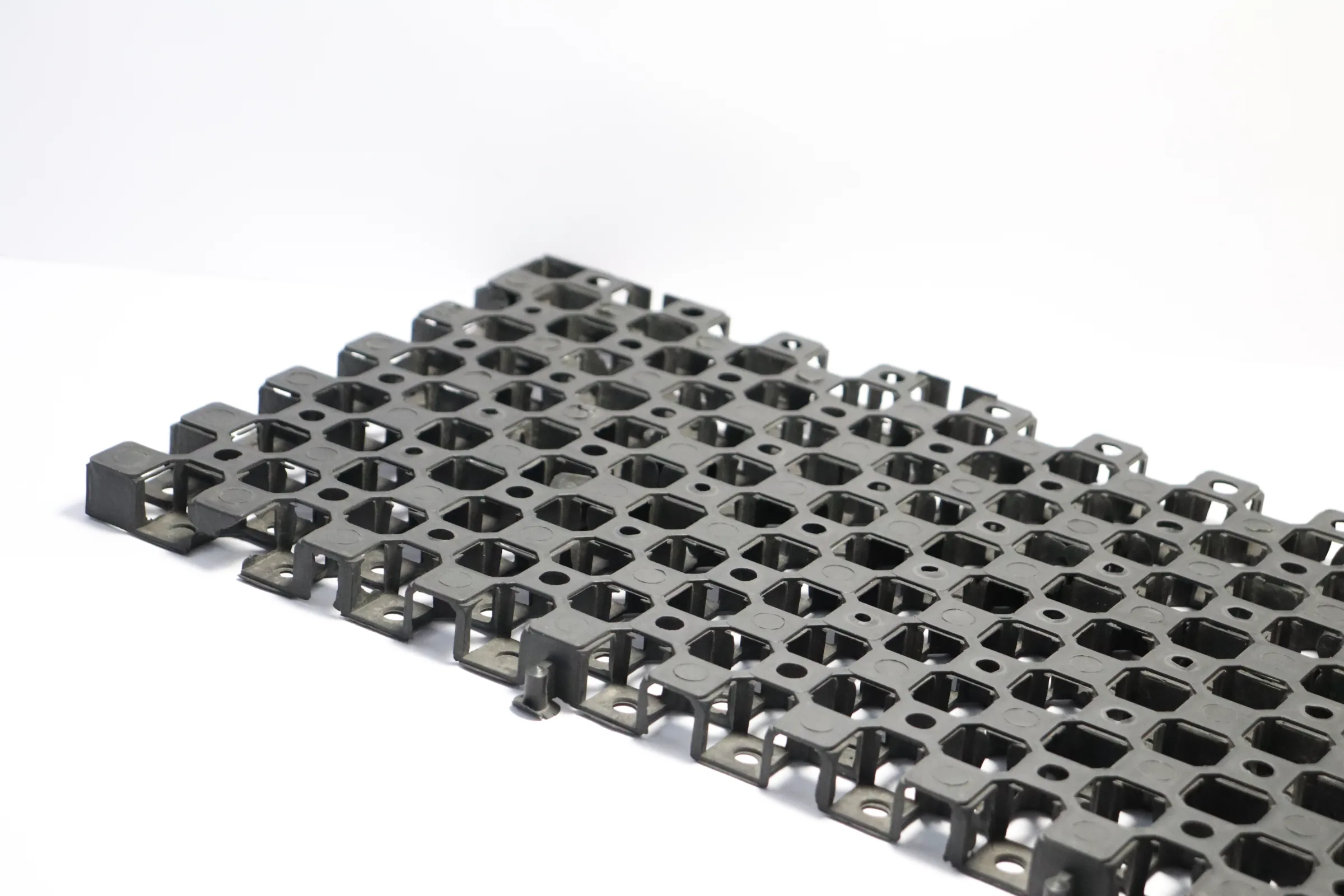
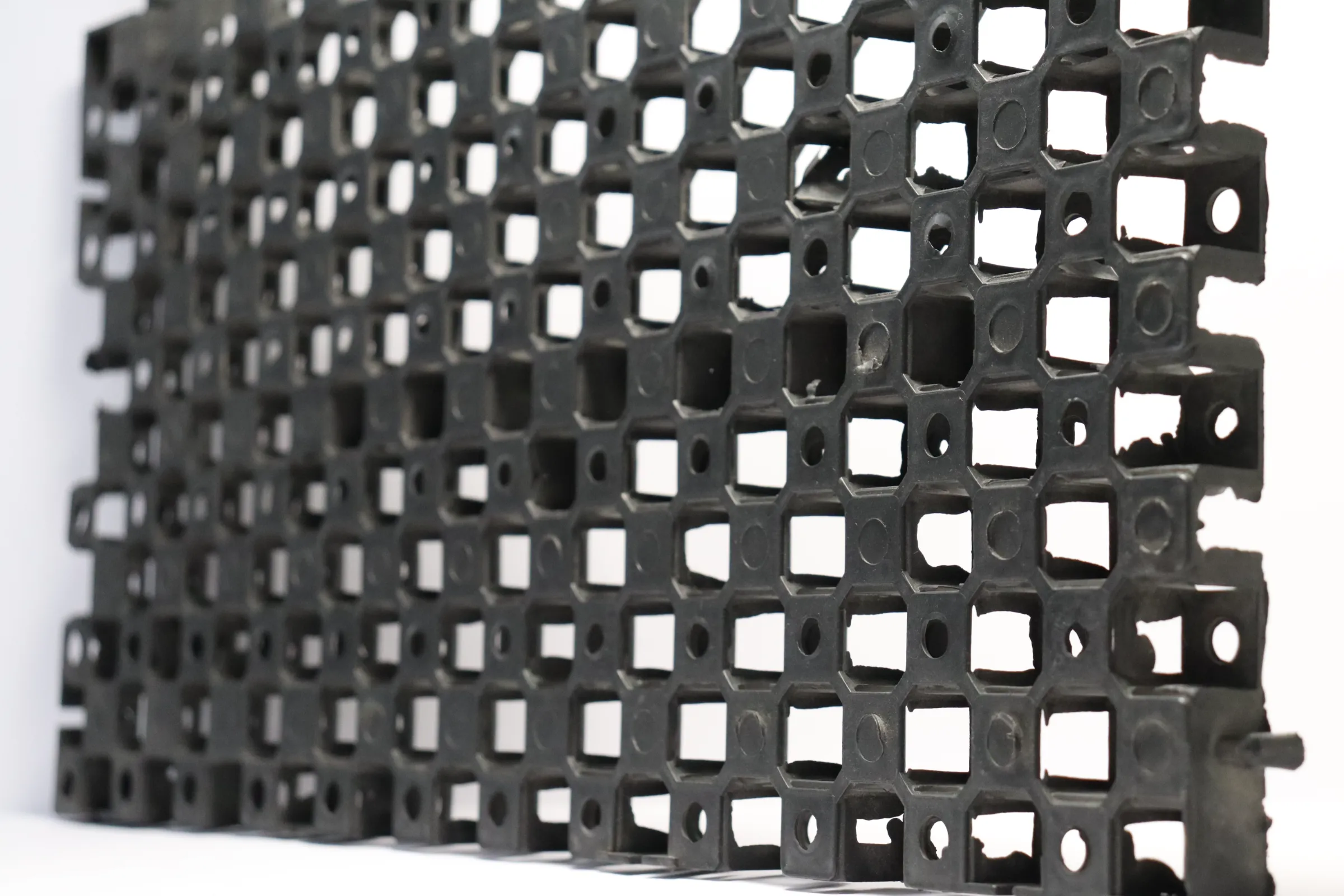
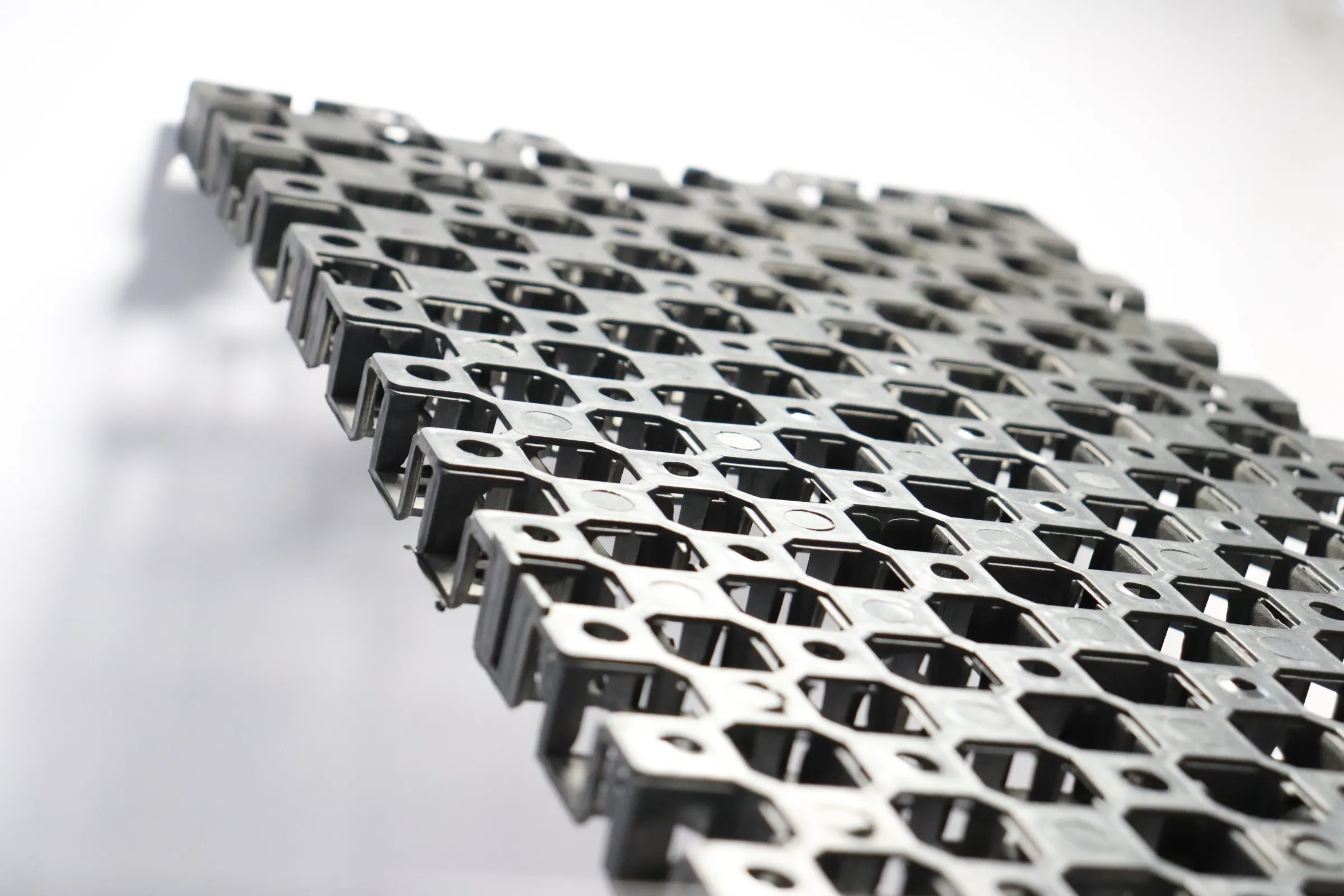
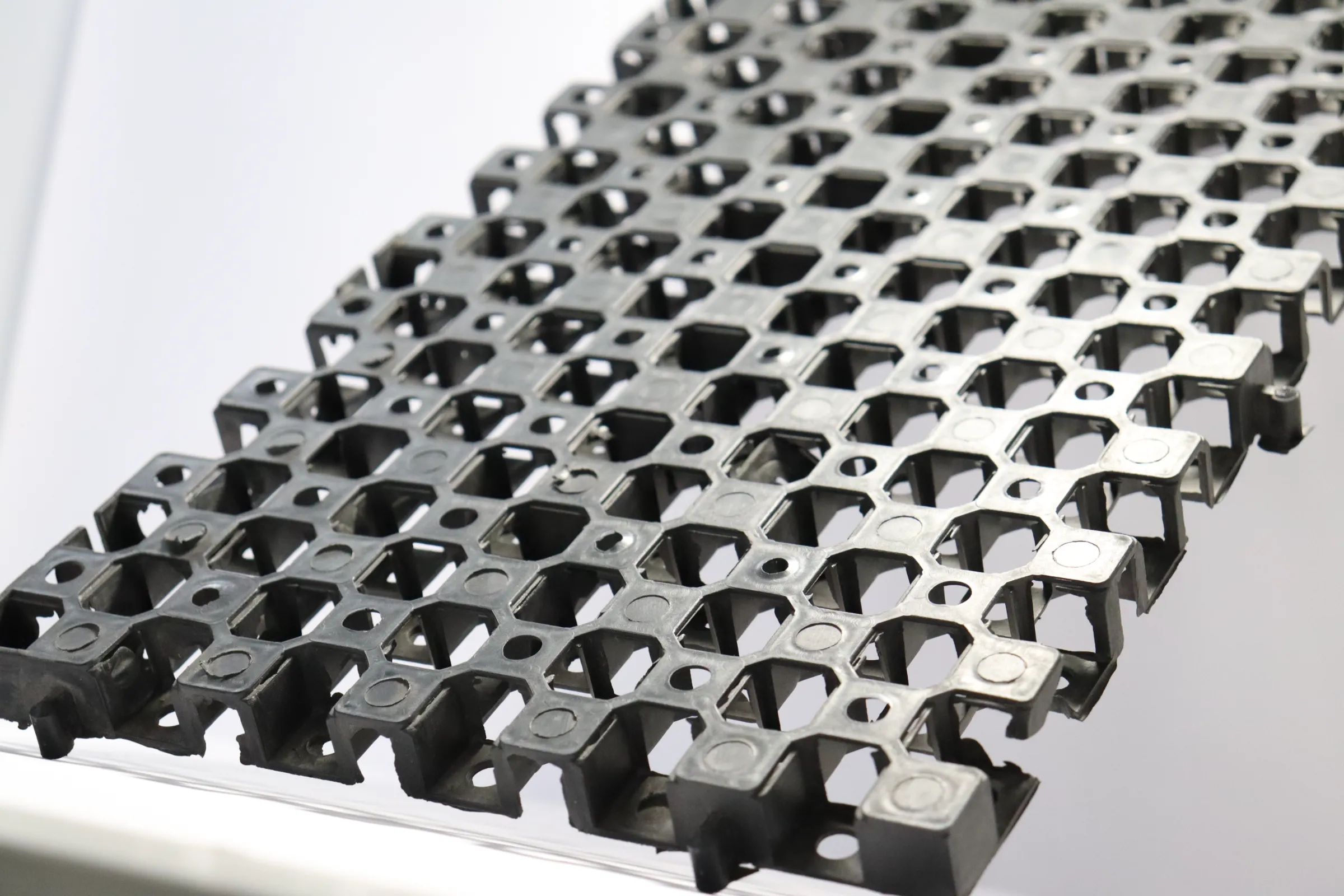
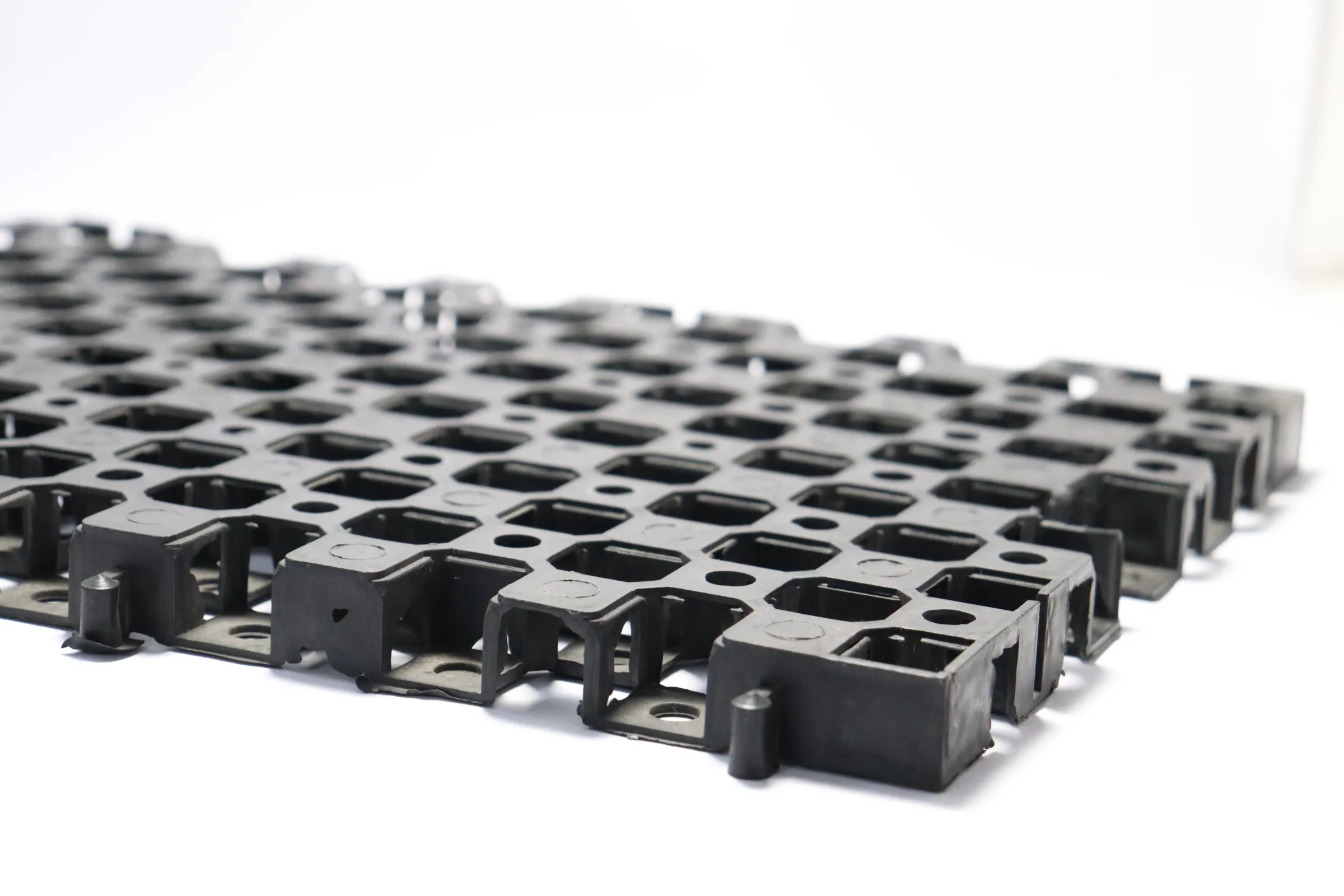
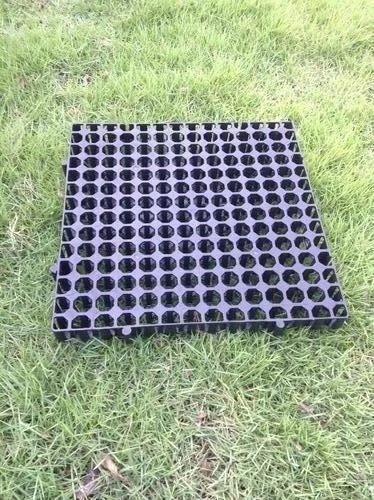
A drain cell is a moulded plastic tile with a grid of hollow cups or columns. Laid on a roof slab or against a wall, it holds the soil or backfill away from the structure and leaves a continuous void underneath, so water drains sideways to outlets instead of standing on the waterproofing. Its function is subsoil drainage.
On roof gardens and podium landscaping this is the main purpose: water that sits on a slab under wet soil finds its way through any defect in the waterproofing. Many cells have cups on the top face that hold a small amount of water. That stored water is available to plant roots by wicking and evaporation, which helps planting survive dry spells, while excess water overflows the cups and drains away.
Drain cells are moulded from HDPE (high-density polyethylene) or polypropylene, often recycled. Both are inert to the chemicals and bacteria found in soil and do not rot. A rigid cell does not collapse or sag under soil load, so the drainage void stays open for the life of the system, unlike a gravel layer that can silt up.
Sizes: 13 mm, 20 mm and 30 mm
- 13 mm HDPE flexo drain cell: thin and flexible, for planter boxes, green walls and podium areas where build-up height is limited, and for following curved surfaces.
- 20 mm drain cell: a middle option for roof gardens, lawns and landscaped decks with moderate drainage demand.
- 30 mm drain cell: the deepest void and highest flow capacity, for large roof gardens, podiums, sports fields and retaining wall drainage. Each 30 mm tile is 500 mm square, with 95 percent internal void space and 67 percent surface void space, and its uniform surface gives an even base for the filter fabric and soil.
What are drainage cells used for?
Drain cells are structural drainage modules for subsurface drainage that needs high water capture and discharge rates and good compressive strength. Modules interlock in the same plane or at right angles to each other, so the same product can line a slab and turn up a wall.
- Roof gardens, podium gardens and terrace landscaping, where they protect the waterproofing from standing water and from damage by roots and backfill
- Planter boxes and raised beds
- Green walls and grass paver areas used in landscaping
- Basements and retaining walls: a vertical drainage layer that relieves water pressure on the wall and leads water to a perforated pipe at the base
- Tunnels and cut-and-cover structures
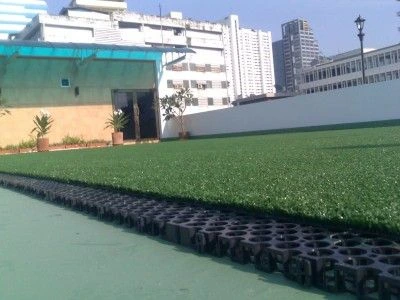
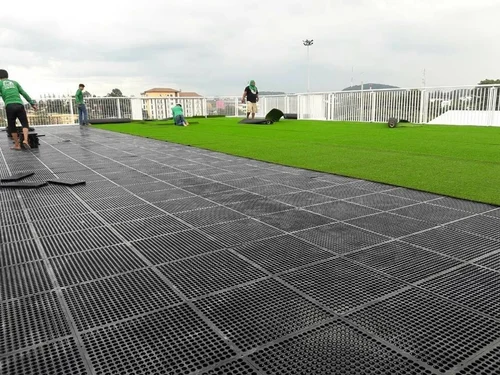
- Sports fields and golf courses, as a fast-draining layer under turf
- Pond filtration systems and concealed drains
- Drainage behind slope and embankment facing
Sectors: civic and landscaping, slopes and walls, coastal, rails and roads.
How a drain cell system is built up
On a roof garden, from the slab upwards:
- Waterproofing membrane on the slab, laid to falls towards outlets, ideally with a root barrier or protection layer.
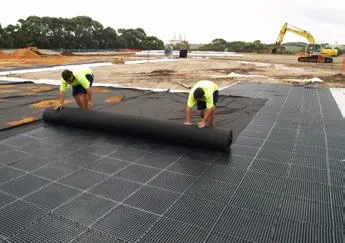
- Drain cells, interlocked across the whole area, cups facing up. Cut cells to fit around outlets and edges.
- Filter geotextile over the cells, lapped at joints and turned up at the edges. A nonwoven geotextile lets water through but keeps soil out of the void, which is what stops the drain cells clogging.
- Growing medium (lightweight soil mix) and planting.
Against a basement or retaining wall, the cells are fixed to the waterproofed wall with the geotextile on the soil side, and a perforated geo pipe at the foot of the wall collects the water.
The main alternative is a gravel drainage layer. Gravel has much smaller voids, so it drains less efficiently for the same thickness, and it is heavy: drainage gravel weighs roughly 1.5 to 1.8 tonnes per cubic metre, so a 100 mm layer adds around 150 to 180 kg per square metre to a roof slab. A plastic drain cell layer weighs a small fraction of that, which matters on structures designed for limited imposed load.
Salient features
- Lightweight with high compressive strength and load-carrying capacity
- Modular, for subsurface drainage on slabs, walls and open ground
- Protects waterproofing membranes from standing water and from damage during backfilling
- Large voids in the 30 mm cell move water quickly to the outlets, and the cups hold water for the plants
- Quick installation: the mats interlock by hand, no tools needed except for cutting
- Inert to soil-borne chemicals and bacteria; versions made from recycled polypropylene reuse plastic waste
How to choose
- Drainage demand: larger areas, heavy rainfall and long drainage paths to outlets need the deeper 30 mm cell.
- Build-up height: where depth is tight (planters, thin podium build-ups), use 13 mm or 20 mm.
- Load: check the compressive strength against the soil depth and any traffic, such as maintenance vehicles on podiums.
- Surface shape: the 13 mm flexo cell follows curves and slopes better than rigid cells.
- Filter: always specify a filter geotextile over the cells; without it, fine soil washes into the void.
Related products
- Dimple drain board for basement walls and below-slab drainage
- Drainage geocomposites for high-flow wall and slope drainage
- Geotextiles for the filter layer
Frequently asked questions
What is a drain cell used for?
To create a free-draining layer under soil on roof gardens, podiums and planters, behind basement and retaining walls, and under sports turf, so water drains away instead of saturating the soil or standing on the waterproofing.
Which drain cell size do I need for a terrace garden?
For most terrace and roof gardens, 20 mm or 30 mm. Use 30 mm for larger areas or long runs to outlets, and 13 mm where build-up height is limited.
Do drain cells need a geotextile on top?
Yes. A nonwoven filter geotextile over the cells keeps soil out of the drainage void. Without it the system clogs.
Drain cell or dimple board?
Both create a drainage void. Drain cells come as interlocking tiles with water-retaining cups, suited to roof gardens and planters. Dimple board comes in rolls and is often used on basement walls and under slabs.
What size is a drain cell tile?
The 30 mm drain cell is a 500 mm x 500 mm tile. Contact us for tile sizes of the 13 mm and 20 mm cells, and for pricing.


Related Case Studies